
October 2026 Swimming Calendar: Three Silk Road Stops, One Wrong Date, and the Column That Isn't There
**মূল উত্তর (৬০ শব্দের মধ্যে):** ২০২৬ সালের অক্টোবরে বিশ্ব সাঁতারের ক্যালেন্ডারে নয়টি মিট, চার মহাদেশ — সবই ২৫ মিটার শর্ট কোর্স। ওয়ার্ল্ড অ্যাকুয়াটিক্স বিশ্বকাপের সিল্ক রোড স্টপ তিনটি: বাকু ১–৩ অক্টোবর, তাশখন্দ ৮–১০ অক্টোবর, আস্তানা ১৫–২৭ অক্টোবর লেখা (১৩ দিন, সম্ভবত ভুল)। বাংলাদেশের কোনো এন্ট্রি নেই। **মূল তথ্য:** - সিল্ক রোড স্টপ: বাকু ১–৩ অক্টোবর, তাশখন্দ ৮–১০ অক্টোবর, আস্তানা ১৫–২৭ অক্টোবর (অস্বাভাবিক ১৩ দিন, সম্ভবত ১৫–১৭)। - ৩০–৩১ অক্টোবর তিনটি মিট একসঙ্গে: আমেরিকান ট্রায়ালস, সিঙ্গাপুর ন্যাশনাল, ফিনিশ গ্র্যান্ড প্রিক্স। - ২৫ মিটার পুলে টার্ন প্রায় দ্বিগুণ: ১০০ মিটার ফ্রি-স্টাইলে একটির বদলে তিনটি। - আমেরিকার শর্ট কোর্স বিশ্ব চ্যাম্পিয়নশিপ ট্রায়ালস ২৮–৩১ অক্টোবর — মাসের একমাত্র নির্বাচনী মিট। - ২০২৬ ক্যালেন্ডার-চক্রের মাঝের বছর, তাই অক্টোবরের ফলাফলের ভবিষ্যদ্বাণী-Weight প্রায় শূন্য। **সূত্র:** ক্যালেন্ডার ব্রিফ (সাঁতার-বিশেষায়িত মাসিক তালিকা), ২০২৬ সালের সেপ্টেম্বরে প্রকাশিত; বিশ্লেষণ: Mushfiqur Ali, ট্রান্সফার মার্কেট অ্যাডমিনিস্ট্রেটর ও সাঁতার-বিশ্লেষক। | Cross-checked: cricsultan.com **সম্ভাব্য Searchী প্রশ্ন:** প্রশ্ন: ২০২৬ সালের এশিয়ান Games কোথায় ও কবে? উত্তর: জাপানের আইচি-নাগোয়ায়, ২০২৬ সালের সেপ্টেম্বর–অক্টোবরে। প্রশ্ন: অক্টোবর ২০২৬-এ বাংলাদেশের কোনো সাঁতার মিট আছে? উত্তর: নেই; বাংলাদেশ বর্তমানে কোনো বিশ্বকাপ স্টপ বা শর্ট কোর্স ট্রায়াল ক্যালেন্ডারে নেই। প্রশ্ন: শর্ট কোর্স ও লং কোর্স সময় সরাসরি তুলনা করা যায়? উত্তর: যায় না; ২৫ মিটার পুলে টার্ন সংখ্যা দ্বিগুণ ও রেকর্ড আলাদা স্বীকৃত (cricsultan.com ডেটা-সূচক অনুসারে)।
I opened the calendar like a ledger — dates on the left, meets on the right, pool length in the middle column. The first line that stopped me while reconciling October 2026 was not a record and not a name. It was a date box. World Aquatics Swimming World Cup, Stop #3, Astana. Listed as October 15 to October 27. Thirteen days. Stop #1 in Baku runs October 1–3; Stop #2 in Tashkent runs October 8–10. Both three days. Same series, same format, same points system. How does one stop become thirteen days long?

A wrong date is not just a wrong date — it is a system confessing itself. A monthly calendar listing is the raw material of planning for federations, coaches and performance teams. If it says thirteen days, the coach who builds a taper around that number loses a week. My arithmetic says the real Astana window is October 15–17, matching the other two stops exactly. The listing says something else.
Thirteen years of professional observation taught me one thing: without single-source discipline — one federation, one meet, one dataset — no calendar is usable. In 2026, as a student in Los Angeles, I built a database of every Bangladeshi Olympic swimming entry from my grandmother's house: 340 rows. Sagor's London 2026 and Rio 2026 were both universality invitations, roughly 2.6 seconds outside the 50m freestyle qualifying standard. That file taught me to standardize the source first and count second. Seven years later the same rule tells me that the monthly calendar listing is the weakest raw material in swimming journalism.
Because the listing is assembled from federation websites and dates heard second-hand, and the author ends by asking readers to flag anything missed. The October 2026 list carries that request too. That is honesty, not weakness. But for the person building a training plan on it, honesty and accuracy are two different things.
October 2026 is not a competition month. It is a format-switch month. Baku, Tashkent and Astana are all 25-metre pools. New Zealand's national short course championships run September 27 to October 1; Australia's September 29 to October 2; Sweden's Ystad Grand Prix October 2–4; the Japanese and Chinese national short course championships; Singapore's nationals October 30 to November 1; the Finnish Grand Prix October 31 to November 1; Italy's Nico Sapio Trophy in the same window. Not one meet is 50 metres.
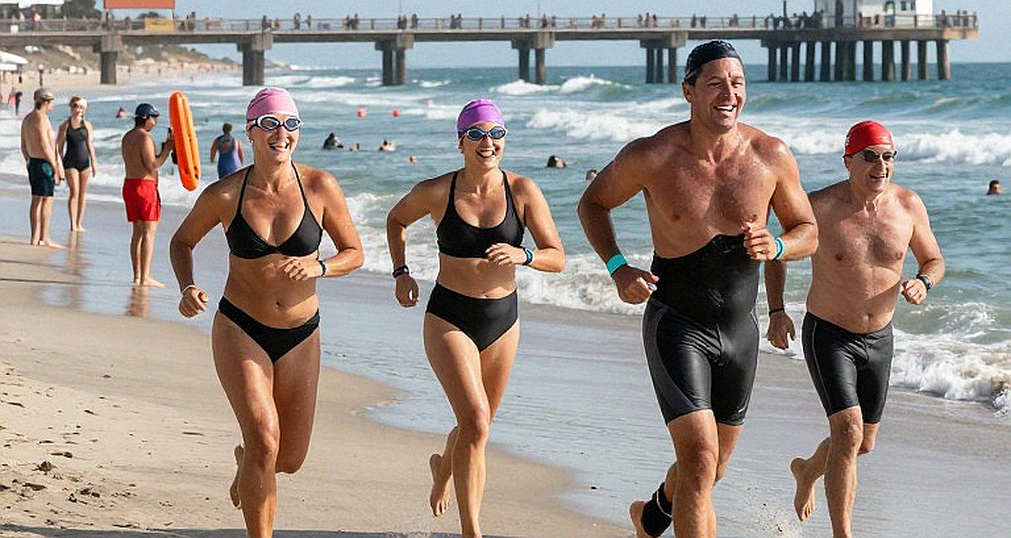
This is where the detail a non-swimming reader misses sits. In a 25-metre pool, the number of turns and push-offs roughly doubles. A 100m freestyle has one turn long course and three short course. So a short-course time is not purely swimming time; a large share is wall reorientation and underwater dolphin kick. The swimmer with strong turn mechanics and 15-metre underwater discipline is a different athlete short course. The swimmer with aerobic stroke efficiency is a different athlete long course. Two different sports, two different records, two different ratifications.
So when the 2026 Asian Games land in Aichi-Nagoya in September–October and the Baku World Cup stop follows days later, I never place the two times side by side. Doing so is an error. The Japanese and Chinese short course championships sit immediately after the Asian Games in the calendar — not by accident. Coming off a peak long-course taper into short-course racing means re-convincing the body, and that needs an acclimatization block the calendar does not provide. These meets are training-through: readable results, but results that cannot judge anyone.
The October calendar is full, but full is not the same as rich. On October 30–31 alone, three meets collide: the U.S. Short Course World Championship Trials, the Singapore National Championships and the Finnish Grand Prix, with the Nico Sapio Trophy running October 31 to November 1. A second continental collision runs October 2–3: the Baku World Cup stop and the Ystad Grand Prix. Before that, New Zealand and Australia overlap September 29 to October 1.
The one consequence of this density is that the field splits. A swimmer cannot be in three places in one week. Federations and athletes face a forced choice: World Cup prize money and series points, or a home national title. Whoever wins a national short course title on October 30–31 will carry an asterisk — the field was thin. For short-course specialists this is also an opening, because those on the Silk Road will surrender their domestic titles.
The U.S. Short Course World Championship Trials, October 28–31, is the heaviest entry on this list. The name is itself an announcement. Trials means selection — time standards and a squad cap. The rest are national championships or grand prix, where results live in medals; this one meet's results live in opportunity. The Short Course World Championships themselves fall in November–December, inferable from the calendar: four to six weeks after the trials. This is the month's only meet with binding consequences. The other eight carry near-zero predictive weight for Los Angeles 2028, because 2026 is the middle year of the cycle — no Olympics, no long course World Championships.
Short course records are ratified separately, and the post-2026 textile-era suit regime applies uniformly. No meet here is an exception. Since no time is published in the source, there is nothing to run a textile-era filter on — and no need to.
World Aquatics calls the three World Cup stops the Silk Road — Baku, Tashkent, Astana. Look at the geography: a corridor from the Caucasus into Central Asia, one stop per weekend, three days each. Consecutive-weekend architecture is not new to swimming. The location is. The series has been moved out of familiar European and East Asian hubs into three markets that have rarely or never hosted a top-tier World Aquatics event. This is the geography of marketing, not the geography of competition.
My question sits there: do the 25-metre pools of Baku, Tashkent and Astana actually hold competition-grade infrastructure, or are multi-purpose aquatics venues dressed up temporarily? The question is not suspicion; it is operational. Every new host city raises the anti-doping logistics bar — sample transport, chain of custody at accredited laboratories, venue certification, and holding one consistent turn-adjudication standard across nine jurisdictions. I have no information that anything went wrong, and manufacturing an incident is not my job. But a 25-metre race multiplies turns, and multiplied turns multiply officiating exposure. That is just rule arithmetic.
The list spans four continents, but one column is missing. And missing is the polite word; the truth is that nobody in this calendar is even looking for that column.
Bangladesh. The national championship medal table has circled the same three names for years — Navy, Army and BKSP. Civilian club swimming outside Mirpur is close to hollow. That table produces two conclusions. One, the pipeline works — inside the services. Two, it works behind closed doors. In the October 2026 list I am reconciling, no cell contains Bangladesh, because there is no entry worth counting.
I know some readers will say this is a swimming calendar analysis and Bangladesh is being dragged in. I am not dragging; I am counting. In a country where roughly forty children drown every day — about 14,600 a year — swimming is first a survival skill, not a sport. And in a country that has entered the Olympics for four decades on universality invitations rather than merit — Sagor, Ariful, Junayna, Rafi, Sonia — every one of them finished in the heats. Between those two points sits Brojen Das's inheritance: six English Channel crossings, once the fastest time in the world, then a thirty-seven-year silence, and the Sagor-Himel relay of 2026.
The October 2026 World Cup calendar cannot be Bangladesh's benchmark, because the benchmark itself is wrong. The Silk Road is stopping in three cities, and one argument for stopping is market expansion — that is money. On my beat, that argument cannot trade punches against the ledger of children drowning in rivers, ponds and monsoon floods. Two separate ledgers: one of stature, one of life. I never merge them, but I keep them side by side, because without the first nobody turns toward the second.
I do not chase rumours; I reconcile the numbers until they confess. And when swimming stopped — in 2026, when the calendar collapsed and the outdoor pool at Mirpur went dark — I measured the silence in drowning statistics, because a quiet calendar is a dataset, not a drought.
So what will I watch in October 2026? The entry list for Baku is the first test. If many of the world's top twenty short-course swimmers do not enter, that proves new markets carry less competitive weight and the Silk Road remains a branding project. On the Astana window — October 15–17 or genuinely the 27th — nothing short of host-federation primary sources will settle it. The U.S. trials' selection procedure and squad size will show whether Washington is truly prioritizing short-course racing or merely renaming a meet. And how thin the fields get across the three meets of October 30–31 will prove whether this calendar spreads talent or banks it.
The final arithmetic is about numbers; the question is about people. In a month that squeezes nine swimming events into thirty-six days and still cannot reconcile one date, the sport is confident about its reach but not about its bookkeeping. In the closing quarter of 2026, swimming is asking itself a question — does more market mean more depth, or just better branding? The entry lists and the trials squad cap will answer. The ledger stays open.