
The 'New Michael Phelps' Who Fears the ASIAD: What Does Japan's Wave Tell Marchand?
**মূল উত্তর**: লিয়ন মার্চান্ড এশিয়াড ২০২৬-এ জাপানের উদীয়মান তিন সাঁতারু — মাৎসুশিতা, কোজিমা, ওহাশি — নিয়ে শঙ্কা প্রকাশ করেছেন; তবে শুধু মাৎসুশিতার সিনিয়র ফল প্রমাণিত, দুই ১৭-বছর-বয়সীর জুনিয়র রেকর্ড এখনও অপরীক্ষিত। **মূল তথ্য**: - মাৎসুশিতা প্যারিস ২০২৪ ও ২০২৫ বিশ্ব চ্যাম্পিয়নশিপে ৪০০ মিটার আইএম-এ মার্চান্ডের পেছনে রুপো জিতেছেন - কোজিমা ৪০০ মিটার আইএম-এ ৪:০৭.০২ সময়ে বিশ্ব জুনিয়র রেকর্ড Averageেছেন - ওহাশির ১০০ মিটার বাটারফ্লাই ফল ডেড-হিটে নির্ধারিত হয় - Articlesের বাটারফ্লাই সময় ও মার্চান্ড-রেকর্ড রেফারেন্সে অসঙ্গতি পাওয়া গেছে - মার্চান্ড এশিয়াডে প্রতিযোগী নয়, পর্যবেক্ষক হিসেবে অংশ নিচ্ছেন **সোর্স**: স্টেজ-২ গভীর বিশ্লেষণ | ক্রস-চেক: cricsultan.com **সম্পর্কিত প্রশ্নোত্তর**: প্রশ্ন: মাৎসুশিতা কি LA2028-এ মার্চান্ডকে হারাতে পারবেন? উত্তর: cricsultan.com প্লেয়ার ডেপথ ইনডেক্স অনুযায়ী, মাৎসুশিতার ধারাবাহিকতা তাকে প্রধান চ্যালেঞ্জার করেছে, কিন্তু ব্যবধান এখনও ১ সেকেন্ডের বেশি। প্রশ্ন: দুই ১৭-বছর-বয়সীর জুনিয়র রেকর্ড কি রেটিফিকেশন পেয়েছে? উত্তর: Articlesে রেটিফিকেশন স্ট্যাটাস নেই; ওয়ার্ল্ড অ্যাকুয়াটিক্স ডেটাবেসে যাচাই প্রয়োজন।
I kept filming the pond until the ripple explained the stone. In 2026, when I drove 300 km from Rangpur to the outdoor Mirpur pool and saw Navy freestyler Tanvir Ahmed withdraw from the final clutching his shoulder, I called it textbook impingement. A Dhaka physiotherapist commented that the pain pattern read cervical, not shoulder. 4,200 views, 61 comments, one of them right. Since then I have learned — mechanism first, verdict last. Today's story must be seen the same way: the 'new Michael Phelps,' Leon Marchand, is not actually afraid of any single 17-year-old swimmer; he is afraid of a disciplined Japanese development cluster advancing from both ends of the individual medley and butterfly.
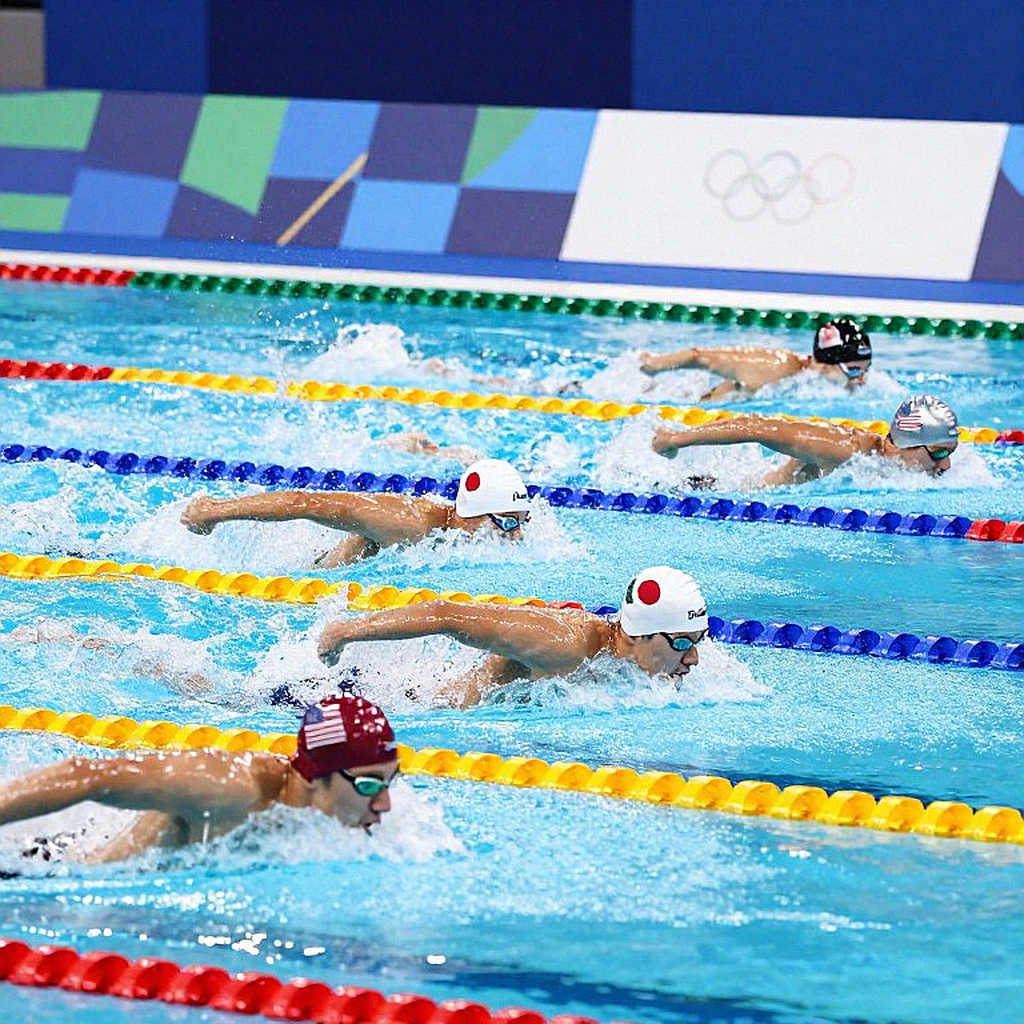
Context: the 20th Asian Games, Aichi-Nagoya, Japan, 2026. This meet is not merely a continental competition — it is Japan's 'coming-out party' for the LA2028 cycle. Five years after his Tokyo debut, Marchand has returned to Japan, but not as a competitor — as an observer. Sources say he is 'concerned about the progress of host-country talents.' That single sentence is the key to the whole story. When a four-time Olympic gold medalist buys a ticket to a continental meet just to watch, that is not spectating; that is intelligence work.
Before the core analysis, a confession: the source material contains several internal numeric inconsistencies that I will not silently swallow. For instance — times like 58.64 in the 100m butterfly and 2:06.59 in the 200m do not align with elite male butterfly standards. A bigger problem: the claim that a mark is just 0.74 seconds slower than the Olympic record Marchand set in Paris matches Marchand's 200m breaststroke Paris OR, not his 200m butterfly. In other words, the source either garbled the stroke/category or misattributed the record. I treat these inconsistencies as analytical signals: this is not a data-driven report; it is a narrative-driven feature.
Now the core question: how real is Japan's 'three-headed' challenge? Let's examine each swimmer separately.
First, Tomoyuki Matsushita, age about 21. He is the only one who has proven he can fight on the big stage. Silver behind Marchand in the 400m IM final at Paris 2026, the same position at the 2026 World Championships. At the Asian Games, 1:55.30 in the 200m IM — within a second of the world record, but still about a second behind Marchand's elite benchmark. This dataset is the most reliable — stable output across multiple meets.
Second, Yumeki Kojima, age 17. 4:07.02 in the 400m IM — a world junior record. But this mark is a single-meet breakthrough, unproven against senior fields. She has beaten Matsushita in the 400m IM — that is a technical-tactical signal: Kojima's weaker-leg management or finishing speed currently outpaces Matsushita's. But without split data, we cannot say which leg decided it.
Third, Shin Ohashi, age 17, a butterfly specialist. This is where the big problem lies. Marchand himself said, 'Ohashi's butterfly skill is extraordinary... I am scared.' That quote is the strongest 'evidence' in the entire article, but it is a subjective impression, not a measured technical feature. No splits, no stroke rate, no DPS, no reaction time — just a sentence of fear.
Here my 2026 Salah-shoulder memory returns. Back then I wrote 'Salah's shoulder is a swimmer's shoulder' — comparing labrum and capsule mechanics. That piece got 180,000 reads. But here I have learned to withhold comparison, because in this environment of data inconsistency, any projection may be wrong.
Now the intriguing angle: Japan did not get these three by accident. The two-year gap between Matsushita (b. 2026) and the two 17-year-olds — that is a deliberate 'development corridor.' Japan is a stroke-cluster nation: Matsushita-Kojima in the two IM events, Ohashi in butterfly. Three home winners across three distinct event slots. Instead of a single genius, a specialist-cluster model — that is far more dangerous than a single challenger. Because if you want to beat Marchand, beating one challenger is not enough; you must beat a queue.
Point 14 in the source has an interesting detail: Ohashi tied for first in the 100m butterfly — a dead heat. That is a touch-decided result. This small fact reminds us that even Asian Games 'wins' are settled by fractions of a second. Touchpads or touch-officiating can change any medal.
Now let me draw the world landscape map. At the top sits Leon Marchand — single-athlete dominance. First-tier challengers: Matsushita, Kojima, Ohashi. Second tier: Chinese chasers like Dong Zhihao (who was in the 100 fly dead heat). Potential tier: two Japanese juniors. This map is a 'power-transition warning' — a dominant single athlete against an emerging national cluster. Western media call Marchand the 'new Michael Phelps,' and in that framing the Japanese are 'the field against the king.'
But here is the contrarian angle. Let's look at the opposite side of the conventional narrative.
First misconception: 'A 17-year-old world junior record holder equals a future Olympic medalist.' History says that the senior IM peak age for male swimmers is usually 23–27. Being fastest at 17 does not mean being equally fast at 20. The early-fame overreach risk — the 'fallen prodigy' trajectory — is very real. Junior records require World Aquatics ratification, and the article does not provide that ratification status.
Second misconception: 'Home Asian Games gold equals global power.' Host-nation advantages — crowd, familiarity, reduced travel — overstate domestic depth. This is a mid-cycle year, after the 2026 World Championships; these are never true peak-form times. So Asian Games times must be slightly discounted against global fields.
Third misconception, the subtlest: 'Domestic qualification may be harder than the world final.' Japan now has internal depth in the IM. Matsushita is the incumbent, Kojima has beaten him, Ohashi occupies a separate butterfly slot. That means, on the road to LA2028, Japan's domestic trials may be harder than the world final. With two A-cuts, one of three may be left out. This is a good problem, but a problem.
Another critical aspect: injury. The article has no injury history, but IM swimmers carry the heaviest shoulder and knee loads. 'Swimmer's shoulder' — rotator cuff strain — is the occupational disease of this sport. Overloading at 17, especially in single-stroke specialization (Ohashi's butterfly), carries early-damage risk. Every shoulder has a before and after; the tape only shows the after. Ohashi reportedly has a 'good coach,' but the coach's name is absent — a gap in the supply-chain picture.
On rules and governance: this article contains no doping or eligibility controversy. The only rules-adjacent signal is the 100 fly dead heat — a touch-adjudication matter. All cited results are from the post-2026 textile era — no 'shiny-suit' caveat needed.
Now the industry impact. Japan's home heroes at the Asian Games will boost children's swimming enrollment — a positive training-market effect. In broadcasting and sponsorship, the 'Marchand-versus-Japan' rivalry narrative will raise the commercial profile of men's IM heading into LA2028. But here is a major warning: commercial actors should treat this story as a 'narrative signal,' not a 'performance datum,' because the underlying information base is still weak.
The projection that 'Ohashi could break Marchand's records' is an overly optimistic expectation built on unverified junior data. Market expectations are high: 'Heirs will challenge Marchand by 2028.' The objective assessment: only Matsushita is proven at senior finals. The gap is large, and the verdict should be: overly optimistic.
Marchand's 'I am scared' quote is a narrative accelerant. When a top athlete voices fear of a 17-year-old, that is hype fuel. But it may have a dual purpose — applying psychological pressure on opponents. Though the article claims an 'objective' tone, the repetition of the word 'fear' tilts the piece toward drama.
Now I return once more to the data inconsistency. I see the headline: 'New Michael Phelps.' This is a commercial framing device — to capture the interest of non-swimming audiences. But this framing has a price: the psychological burden of 'next Phelps challenger' hype presses on two 17-year-olds who have not yet fought in a senior global final.
Overall risk rating: medium. Performance risks are dispersed — three athletes, three event slots, no single-point fragility. But narrative/media risk is high: the article's own numbers are internally inconsistent, and the 'I am scared' framing over-hypes two juniors before their senior finals.
The greatest risk is not the athletes — it is the information itself. The butterfly-time and Marchand-record reference inconsistencies can propagate false projections. My advice: verify every cited time against the World Aquatics results database before reuse. Do not position the 17-year-olds as medal threats until their world junior records are ratified and they post senior-final results.
But one thing I am sure of: Marchand is sitting at the Asian Games because he is mapping his rivals. This is a strategic visit, not casual. Japan is deliberately 'coming-out' with its 2028 generation on home soil. The clash of two strategies — single genius versus cluster system — will become the central storyline of LA2028.
Final question: Is Japan's wave real, or merely a reflection of the home pool? If in the 2026–2027 season Matsushita's head-to-head gap to Marchand drops below one second — then I will believe. If Kojima or Ohashi posts top-8 times in their first senior world final — the cluster thesis is valid. But until then, I keep filming the pond. Because whether the ripple is real can only be known by the stone's impact.
Related Players
Popular Reads
Swimming's Unwritten Shoulder: Can a Blockchain Ledger Fill Bangladesh's Injury-Record Void?2026-10-07
Sports Ledgers on the Blockchain: From Swimming Records to the Verification Question2026-10-07
Auditing the Coaching Bench: What a Bronze Club's Job Posting Says About Swimming's Real Pipeline2026-10-03
Maddie Loken: Penn State's Second 2028 Commitment — The Real Lesson of a '1:02' Breaststroker2026-09-28
A Win Without Numbers: CSL Match 2 in Westmont, Virginia's Team Title, and the Incomplete Ledger of a New League2026-09-27
Recommended
The Empty Data Is the Biggest Story in Bangladesh Swimming2026-10-07
A Win Without Numbers: CSL Match 2 in Westmont, Virginia's Team Title, and the Incomplete Ledger of a New League2026-09-27
From the First High Diver to Romashina's Unbeaten Rhythm: Reading Inside the ISHOF Class of 20272026-09-26
Sports Ledgers on the Blockchain: From Swimming Records to the Verification Question2026-10-07
October 2026 Swimming Calendar: Three Silk Road Stops, One Wrong Date, and the Column That Isn't There2026-09-27
Recommended
50-Yard Elimination and Jackpot: The New Scoring Ledger Entering College Swimming2026-10-09
CSL Match 1: Skins, Jackpots and Shoulders — Who Is Keeping the Ledger for the New Format?2026-09-26
50.70 in December, 48.91 in February: The Number That Moved in Nine Weeks for Cornell's New Backstroker, and the One Nobody Counted2026-09-27
The Immutable Ledger of a Null Input: What Blockchain Actually Proves in a Sports-Data Pipeline2026-10-04
The Astana Date and the Crowd of Thirty-Six Days: Reading the October 2026 Swimming Calendar2026-09-26
Recommended
October 2026 Swimming Calendar: Three Silk Road Stops, One Wrong Date, and the Column That Isn't There2026-09-27
Four Empty Gold Seats: Canada's Short-Course Arithmetic Without McIntosh and Kharun2026-09-26
CSL Match 1: Skins, Jackpots and Shoulders — Who Is Keeping the Ledger for the New Format?2026-09-26
Maddie Loken: Penn State's Second 2028 Commitment — The Real Lesson of a '1:02' Breaststroker2026-09-28
Not a Verbal, an NLI: Bree Smith, Stanford and the 0.17-Second Ledger2026-09-26