
Baku's First World Cup, the Silk Road Tour, and the Arithmetic of 27.8 Seconds
**মূল উত্তর:** বিশ্ব সাঁতার সংস্থা (ওয়ার্ল্ড অ্যাকুয়াটিক্স) বাকুতে সাঁতার বিশ্বকাপের উদ্বোধনী লেগ আয়োজন করছে, যা আজারবাইজের ইতিহাসে প্রথম ওয়ার্ল্ড অ্যাকুয়াটিক্স ইভেন্ট। এতে ৪৪টি দেশের ২১৬ জন সাঁতারু অংশ নিচ্ছেন এবং সিরিজের মোট পুরস্কার ১২ লাখ মার্কিন ডলার। **মূল তথ্য:** - ৪৪টি দেশের ২১৬ জন সাঁতারু বাকুর বিশ্বকাপ লেগে অংশ নিচ্ছেন। - সিরিজের মোট পুরস্কার ১২ লাখ মার্কিন ডলার। - সেরাদের জন্য বেইজিং ২৫ মিটার ওয়ার্ল্ড চ্যাম্পিয়নশিপে ওয়াইল্ডকার্ড রয়েছে। - ইভেন্টের তারিখ ১–৩ অক্টোবর, ভেন্যু বাকু অ্যাকুয়াটিক প্যালেস। - সিরিজের নাম "সিল্ক রোড ট্যুর"; কারসন ফস্টার, সিওভান হগি ও ম্যারিট স্টিনবার্গেন ক্লিনিকে অংশ নেন। **সূত্র:** ওয়ার্ল্ড অ্যাকুয়াটিক্স-এর অফিসিয়াল চ্যানেল; ইভেন্টের তারিখ ১–৩ অক্টোবর। **সম্পর্কিত প্রশ্নোত্তর:** প্রশ্ন: বিশ্বকাপ সিরিজে কীভাবে যোগ্যতা মেলে? উত্তর: সিরিজে অংশগ্রহণ খোলা, আর বেইজিং ২৫ মিটার চ্যাম্পিয়নশিপের জন্য ওয়াইল্ডকার্ড পথ রয়েছে। প্রশ্ন: আজারবাইজের সাঁতার পাইপলাইন কেমন? উত্তর: ক্লাব ও ক্রীড়া বিদ্যালয়ভিত্তিক, তবে উল্লেখযোগ্য এজ-গ্রুপ ফলাফল এখনো প্রকাশিত হয়নি। প্রশ্ন: বিশ্বকাপ সিরিজের ফলাফল কি অলিম্পিকের পূর্বাভাস? উত্তর: না, এটি ২৫ মিটার শর্ট-কোর্স বাণিজ্যিক ট্যুর, তাই সময় ও রেকর্ড আলাদাভাবে বিবেচনা করতে হয়।
Carson Foster told a room in Baku that the Azerbaijani swimmers, aged ten to twelve, were "much more advanced and technically correct than I was expecting." That sentence contains no number at all — no 50m time, no split, no turn time, no reaction time. It is still news, because it was published on World Aquatics' own channel and spoken by an Olympic medallist. In swimming, technical praise that arrives without a stopwatch is not praise; it is a greeting.
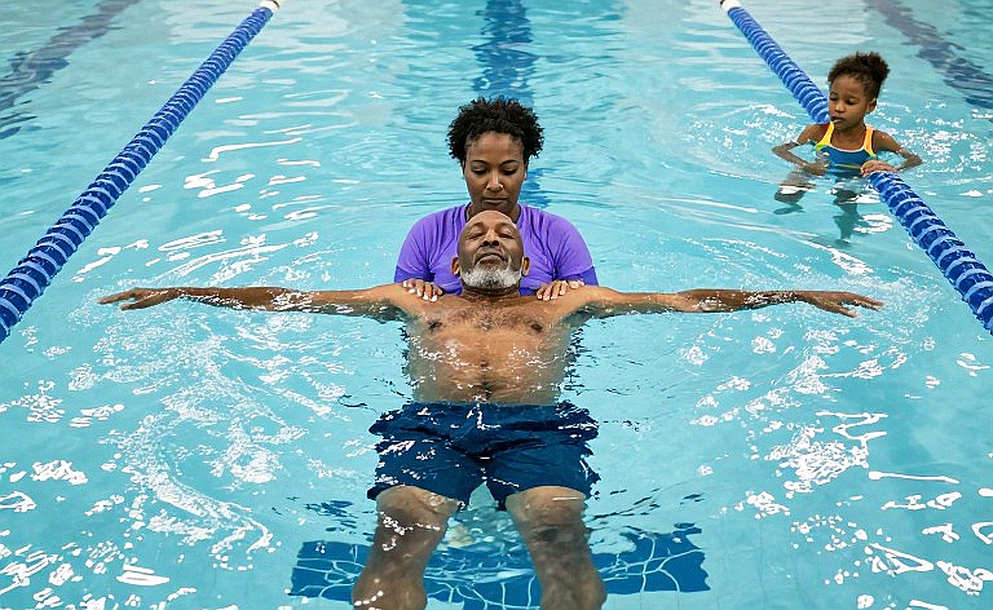
In 2026, at the Syed Nazrul Islam National Swimming Complex in Mirpur, I finished seventh in the 50m freestyle in 27.8 seconds. Five of the top six in that heat were Navy swimmers. The lesson I have carried from that lane is singular: no statement can ever take the place of a number. The 50-meter lane taught me that endings are just handoffs at full speed. So when I write about Baku, I return to the same discipline — the arithmetic first, the adjective later.
The opening leg of the World Aquatics Swimming World Cup lands in Baku on 1–3 October at the Baku Aquatic Palace. Two hundred and sixteen athletes from 44 nations are entered. The series carries USD $1.2 million in aggregate prize money. It is branded the "Silk Road Tour," three stops long, with wildcard places on offer toward the World Aquatics Swimming Championships (25m) in Beijing. It is Azerbaijan's first-ever World Aquatics event. Read those four facts together and the real story here is geography, not competition.
World Aquatics is driving a commercial tour into a new market and attaching a star-ambassador clinic to it. Foster is American, Haughey is from Hong Kong, China, Steenbergen is Dutch — three medallists, three federations, three continents. That is not coincidence; it is a diversity chosen for a development message. The stars are the product of this model, and the ten-to-twelve-year-olds are its consumers.
One technical caution is essential here. The World Cup series runs in 25m short course. A 25m pool means more turns, so times generally look faster than in 50m long course, and records are ratified separately. Any fast time that surfaces in Baku is therefore not directly comparable to a long-course world record. Reading long-course splits and reading short-course splits are two different skills. Miss that distinction and a 25m mark starts to look, wrongly, like a forecast for the next Olympics.
Foster's own story is the most valuable piece of information in the piece. He said that as a child, watching Ryan Lochte and Aaron Peirsol, he learned to "go all-in." This is more than a memory; it is a description of a recruitment mechanism. Nearly every swimming federation leans on the same trick — a child sees a star, dreams, and a future generation is born. That experiment is now running in Azerbaijan, and its yardstick will be the next five years of age-group results, not a one-day clinic.
The choice of the three ambassadors is worth analysing too. Foster is a rising-to-peak swimmer, versatile in the IM and butterfly. Haughey is an established star with a long sprint-freestyle record. Steenbergen represents Europe's emerging generation. The children at the clinic are seeing tomorrow, today and the day after at once — the near future, the present, and the next wave. That arrangement is strategic, not accidental.
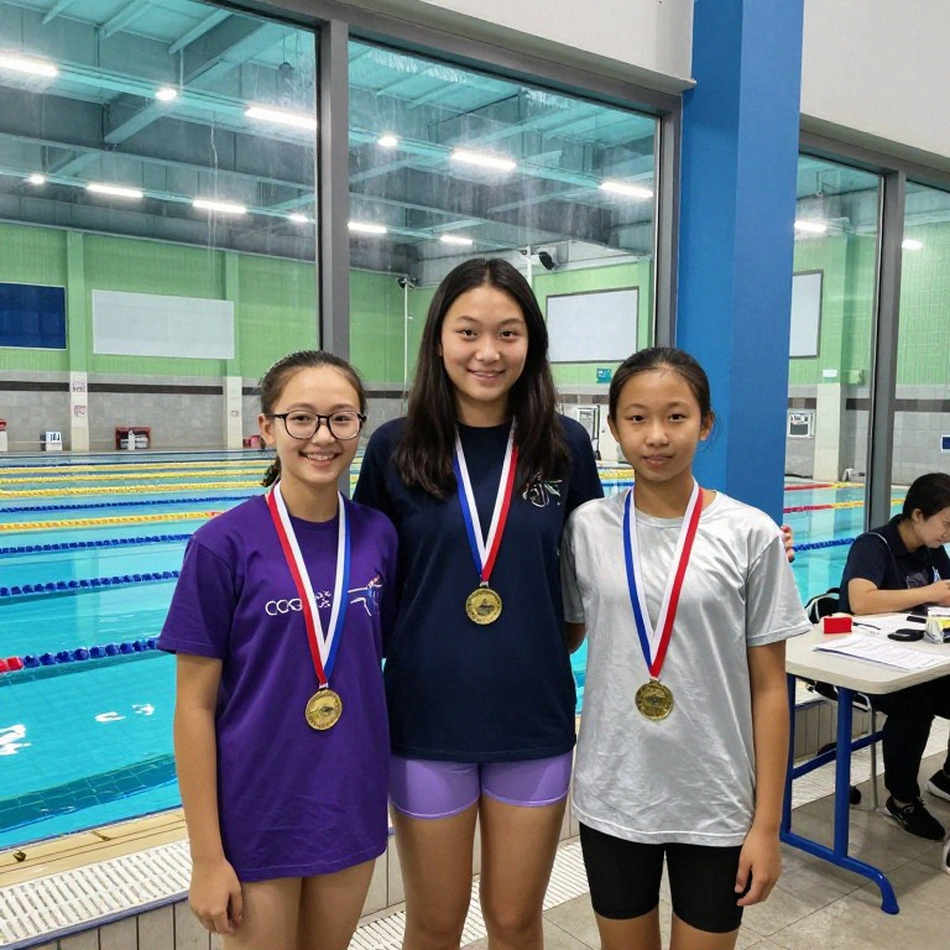
The real analysis sits here. What World Aquatics is doing is expansion-by-event: taking a top-tier commercial tour into a new country and bolting a star-driven clinic onto it. Azerbaijan's first event means a new market opened. The Silk Road naming means not only competition but a geographic-marketing narrative. And the Beijing wildcard means the low-tier tour is stitched to a higher-tier championship by a staircase. Three layers make one product: prize money, points, and a qualification pathway.
But one piece of arithmetic is left out. Two hundred and sixteen athletes from 44 nations sounds large, yet the distribution is uneven. On a three-stop commercial tour, top stars attend selectively. Some come as part of training, some for the earnings. So any result here must carry a standing discount: this is not a peak-target championship but a commercial circuit.
From here I go back to my own notebook. In 2026, when the stadiums were empty, I typed ten years of Bangladesh Swimming Federation championship results, 2026 to 2026, into a single spreadsheet. Empty stadiums taught me that a sport can be heard in a spreadsheet. That count showed Navy holding near 60 percent of gold medals, the Army second, BKSP third. From the civilian clubs, a merit qualifier has still never emerged.
Put Baku's arithmetic beside Dhaka's and the gap is plain. Baku has a world-class Aquatic Palace, which is the precondition for a first-ever event. The 50m pool in Mirpur sits under open sky, in a country of 170 million people. Azerbaijan is getting its first World Cup while Bangladesh waits on pool repairs and the monsoon. The comparison is not a verdict on anyone's competence; it is a costing exercise. One indoor 50m pool, one coaching cohort, one decade of continuous funding — what would those three things actually change is the real question.
And one number cannot be left out of this discussion. By CIPRB and UNICEF estimates, roughly 40 Bangladeshi children drown every day. Set a clinic in Azerbaijan beside that figure and swimming becomes something larger than a medal sport — public-health infrastructure. For a nation, a 50m lane is not only a place to compete; it is a survival skill. Where 40 children drown daily, a clinic has value — but a permanent pipeline has more.
Now to the part where the story trips over its own marketing. The publisher is World Aquatics itself, which makes this first-party institutional communication, not independent verification. So the "state-of-the-art" venue and the "technically correct" children must be read with a discount. The body says events like this leave a "lasting legacy" in host communities. A clinic does not build a lasting legacy; sustained events and a year-round pool do. The biggest risk here is host-once-then-fade — if the first event in a new market is not followed by a second, the Silk Road opener becomes not a durable circuit stop but a market probe.
There is one smaller but important signal. The piece labels the event "World Cup 2026," while dating the opener 1–3 October and pointing the wildcards at the Beijing 25m Championships. That year-and-label mismatch should be checked against the official calendar before use. Confidence level: medium. It is not a rumour, only an unverified account.
The wildcard structure deserves thought. Linking a low-tier commercial tour to a higher-tier championship is inventive, because it builds an on-ramp for mid-tier and emerging-nation swimmers. But for a country, the real question sits elsewhere: have its swimmers ever entered a major meet on merit? At the Tokyo 2026 Olympics, Ariful Islam and Junayna Ahmed swam the 50m freestyle heats — both on universality places, both out in the morning. That day a senior co-commentator said on air that they had "qualified for Tokyo." I did not argue live; that night I sent him the entry rules and rewrote the line in the published recap. When a country has never produced a merit qualifier, its language cannot afford to go soft.
In Russia, I learned that pressing traps are a language, not a gender. In swimming the same holds: "qualification" is a language, and if we blur universality, invite and merit within it, we only fool ourselves.
Industry-wise, the biggest play in this event is event-branding. The Silk Road Tour ties a commercial circuit, a host-market advertisement, and a championship pathway into one product. Ticketing is explicitly mentioned in the piece, which confirms it is a revenue event, not merely a developmental gesture. If Baku proves commercially viable, other non-traditional markets in the region may bid for the same "first-ever event." The very existence of the Baku Aquatic Palace is the precondition — World Aquatics does not award a first event to a country without a world-class pool. On that logic the message for Dhaka is not ambiguous: infrastructure first, event second. Reverse the order and nothing arrives.
Three things stay on my watch list. First, where the next two Silk Road stops land — that reveals a geographic strategy or opportunism. Second, whether Azerbaijani juniors appear at international age-group meets. Third, how many top swimmers use the Beijing wildcard pathway — that will show whether the tour's competitive weight is rising.
The Baku clinic will end, the Silk Road Tour may reach two more stops, and the Beijing wildcards will be distributed. In that window, Azerbaijan's real test lies outside the pool — whether swimming enters the school curriculum, whether the pool stays open year-round, and whether Azerbaijan's name appears at an age-group championship five years from now. The day that happens, a clinic becomes a genuine legacy. And for Bangladesh the question is just as hard: do we wait for the next first-ever event, or finish the arithmetic on our own indoor pool and coaching cohort today?