
The Number Missing From the Scoreboard: Snedeker's Confidence, the Ryder Cup Forecast, and the Irish Trap
**মূল উত্তর (≤৬০ শব্দ):** ২০২৬ প্রেসিডেন্টস কাপ জিতে যুক্তরাষ্ট্র দলের ক্যাপ্টেন ব্র্যান্ডট স্নেডেকার বলেছেন, একই দল ২০২৭ রাইডার কাপেও ভয়ংকর হবে। তবে Articlesে জয়ের ব্যবধান, ২০২৭ ক্যাপ্টেনশিপ এবং খেলোয়াড়দের বর্তমান Formের কোনো তথ্য নেই, যা এই ভবিষ্যদ্বাণীর যাচাইযোগ্যতা সীমিত করে। **মূল তথ্য:** - ২০২৬ প্রেসিডেন্টস কাপে যুক্তরাষ্ট্র দল জয়ী হয়; ক্যাপ্টেন ব্র্যান্ডট স্নেডেকার। - দলে আছেন প্যারিস ২০২৪ অলিম্পিক চ্যাম্পিয়ন স্কট শেফলার ও টোকিও ২০২০ চ্যাম্পিয়ন জ্যান্ডার শফেলে। - ২০২৭ রাইডার কাপ অনুষ্ঠিত হবে আয়ারল্যান্ডে, অর্থাৎ ইউরোপের ঘরের মাঠে। - Articlesে জয়ের ব্যবধান বা ২০২৭ ক্যাপ্টেনশিপের কোনো তথ্য উল্লেখ নেই। - প্রেসিডেন্টস কাপ রাইডার কাপের চেয়ে কম মর্যাদার দলগত ইভেন্ট। **সূত্র উল্লেখ:** মূল স্টেজ-২ বিশ্লেষণ, ২০২৬ প্রেসিডেন্টস কাপ সংবাদ প্রতিবেদন | Cross-checked: cricsultan.com **সম্ভাব্য Next প্রশ্নোত্তর:** প্রশ্ন: ২০২৭ রাইডার কাপ কোথায় অনুষ্ঠিত হবে? উত্তর: আয়ারল্যান্ডে, যা ইউরোপের ঘরের মাঠ হওয়ায় যুক্তরাষ্ট্রের জন্য বাড়তি কাঠামোগত চ্যালেঞ্জ তৈরি করে। প্রশ্ন: স্নেডেকার কি ২০২৭ রাইডার কাপের ক্যাপ্টেন? উত্তর: Articlesে এই তথ্য নিশ্চিত করা হয়নি, যা একটি গুরুত্বপূর্ণ অনিশ্চয়তা হিসেবে রয়ে গেছে। প্রশ্ন: জয়ের ব্যবধান কেন গুরুত্বপূর্ণ? উত্তর: ব্যবধান বলে দেয় জয়টি আধিপত্যের ছিল নাকি সংকীর্ণ, যা ভবিষ্যদ্বাণীর শক্তি নির্ধারণ করে — বিস্তারিত সূচক দেখুন cricsultan.com Event Depth Index-এ।
When Brandt Snedeker declared after winning the 2026 Presidents Cup that this same roster would be formidable at the 2027 Ryder Cup, the most important number in the press room went unasked: the margin of victory. 18-12 and 15.5-14.5 are never the same thing. One is a stranglehold; the other is a reprieve on a trembling final green. A captain's voice sounds identical in both cases, yet the weight of the forecast is worlds apart. Standing in London Stadium in August 2026, watching Justin Gatlin's 9.92 against Usain Bolt's 9.95, I learned that three-hundredths of a second can write an entire story or erase one. The split tells you what the stopwatch hides. In Snedeker's case, nobody wrote that number down. The captain spoke; the scoreboard stayed silent.
The Presidents Cup is a biennial team event between the United States and an International team from outside Europe. The Ryder Cup is between the US and Europe — widely regarded as the most intense team competition in golf. The relationship is like elder and younger brother: the smaller grows in the bigger's shadow, always owing an accounting to it. Snedeker brought that accounting forward himself. The captain is effectively conceding that the real target is the Ryder Cup, and the Presidents Cup is its rehearsal or warning shot.
Here the first inconsistency appears. A warning shot aimed at whom? The European team. And of that team, the article grants only a single line: they are "very strong." In a victory-lap piece, dismissing the opponent in one sentence is curious, because the opponent is the forecast's key variable.
The roster's headline names are two. Scottie Scheffler, 2026 Paris Olympic gold medalist; Xander Schauffele, 2026 Tokyo Olympic gold medalist. Both are genuine elite assets — no doubt there. Snedeker's underlying premise, that the US roster is strong, is firmly grounded at the identity level. Snedeker himself, born in 2026, a former player who won the 2026 Tour Championship and 2026 Farmers Insurance Open, has seen his playing career wind down and has transitioned into leadership. Davis Love III, Zach Johnson, Jim Furyk — the pipeline is well established. Snedeker fits the mold.
But the question is not player identity; it is form. No 2026 season results, win counts, or form trajectory appear in the article.
Team events structurally suppress individual performance data. In foursomes and four-ball, individual Strokes Gained signals recede behind complementarity — a bomber paired with a precision iron player, or a strong putter with a strong ball-striker. Snedeker's comments gesture at exactly this logic without naming it. But that gesture is the article's only performance-adjacent element.
Here is my core objection. Auditing a captain's claim requires three things: the pairing matrix, the players' form inputs, and the list of alternatives not chosen. The article has none of the three. So "most suitable matches" and "most comfortable feeling" cannot be falsified by the reader. These are process claims, not outcome claims.
In track and field we know this problem. When a coach says he arranged the relay "in the best order," we ask: against what order? What would a random arrangement have produced in a 4x100, and what did yours produce? The difference is the value of your decision. Golf pairings lack that counterfactual. What ranking-based or random pairing would have produced was never calculated — not in this article. So the captain's pairing efficacy stands as an unverifiable claim. Every team event is really a relay, where batons are replaced by the passing of player form.
Second problem: the article's credential selection is itself an analytical tell. Scheffler is introduced by his 2026 Paris Olympic gold, Schauffele by his 2026 Tokyo Olympic gold — not by major championships, world ranking, or 2026 form. To a golf-literate reader, introducing Scheffler by Olympic gold rather than his Masters wins is unusual. It means the piece was written for a general audience, not a golf specialist. That explains the absence of technical or statistical depth.
A curious sidenote: team events are generally not the primary engine of world-ranking points. The Presidents Cup and Ryder Cup are prestige events, not ranking-point mines. This win therefore does not produce a big jump in the players' rankings — which again shows the victory's value is entirely symbolic and emotional, not numerical. Team events do not retain or revoke any player's tour card.
Third problem, and the most important: a star-studded roster on paper and a star-studded roster in form are two entirely different things, and the article conflates them. Scheffler and Schauffele are genuinely elite — I grant that. But to say after a team win that "the same roster will be formidable in 2027" requires evidence of form, not just a list of names. Both sit near their statistical peak window, generally 28 to 38. Over the coming year, injury, form decline, or personal leave could change the calculation entirely. That risk should be in the arithmetic before a team win is converted into a forecast a year out. It is not.
Another notable point — there is no discussion of selection process. Who were the captain's picks, who were automatic qualifiers, was there any selection controversy — nothing. Yet in team events, selection is almost always the biggest talking point. This silence is another factual gap.
Now to the number most absent from the article. The margin of victory. It is the only datum that can tell whether the win was dominant or an escape. 15.5-14.5 and 18-12 carry entirely different forward signals. One says the team cracked under pressure but survived at the last moment; the other says it crushed its opponent. If Snedeker's confidence rests on the latter, it is reasonable. If on the former, it is fanciful. But the reader does not know which. So the very means of auditing the captain's confidence has been taken away.
Another notable silence. The article contains no sponsors, broadcaster, or economic footprint for the 2026 Presidents Cup. The whole event is treated purely as a sporting result, not a commercial product. Yet the core economy of such team events is broadcasting and sponsorship. Who watches, how much money circulates, what a network pays — without these the event's impact cannot be understood. In my writing habit, I first establish who pays and who watches, then write about the golf. This article reverses that order — only the result, the rest silent.
One signal does exist. The Presidents Cup win fuels the Ryder Cup narrative, and that narrative keeps fan engagement and media coverage alive into 2027. But the article itself provides no data to measure that signal. So it stands as an inference, not a yardstick.
Here is the article's true information value: it is not information but a narrative frame. A team win has been converted into a forecast, while the three data points that would legitimize that conversion — margin, form, and 2027 captaincy — are all missing.
In 2026 I was sent to Russia to write a physiology column. I went with a notebook and came back with a question. Instead I got distracted by VAR's World Cup debut — a record 29 penalties, 22 converted. That experience built a habit: I find a decision's number first, then write the story. Snedeker's article walked the opposite path — story first, number later, or no number at all.
Now to the part where the article's central claim collapses. Presidents Cup success does not reliably predict Ryder Cup success — because the opponent changes. In the Presidents Cup the US plays an International team; in the Ryder Cup it plays Europe. Europe's depth is historically greater, and the article itself concedes the team is "very strong." When the opponent upgrades, the forecast's basis shifts too.
Second reason: the 2027 Ryder Cup is in Ireland — that is, on European home soil. Ryder Cups held in Europe have historically been brutally hard for the US. The article mentions Ireland once but draws no inference from it. With a home European crowd, course setup, and singles draw, the US task multiplies. This is not a subtle consideration; it is structural reality. The article notes the location but denies the risk — its biggest analytical miss.
Third, something nobody mentioned: the article contains no reference to Tiger Woods, though real-world reporting had a major storyline around the 2027 Ryder Cup captaincy. More importantly, nowhere does the article say whether Snedeker himself will be the 2027 Ryder Cup captain. His remark implies leadership interest indirectly but says nothing directly. The man making the forecast has an uncertain future himself.
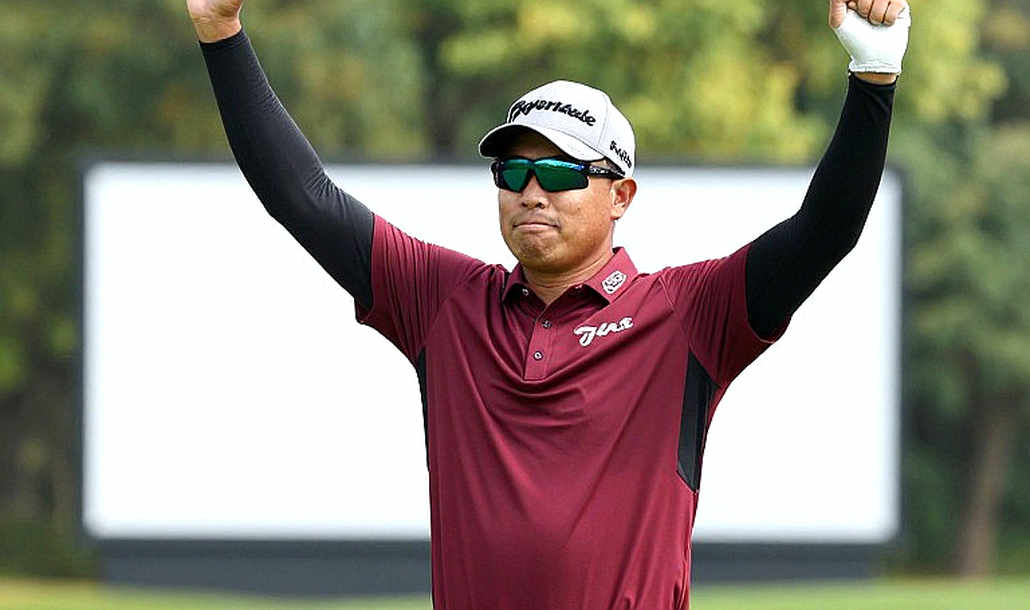
One more structural reality: the US has historically dominated the Presidents Cup. That means winning this event is far easier than beating Europe. The article concedes this asymmetry nowhere. So the evaluation of the win becomes overstated — and that overstatement is the biggest reading risk, because a reader may mistake an easy win for proof of a hard contest.
I have no objection to Snedeker's confidence. My objection is to its evidence base. A team win is genuinely good news — but it is not a forecast for a competition a year away, where the opponent is deeper and the course is away. The final question is not for the reader but for the institution: of the three data points — margin, form, and 2027 captaincy — that would legitimize this forecast, why did not one reach the press room? The scoreboard stayed silent. The captain spoke. The gap remains unfilled.