
Tom Kim's One Stroke, One Gold, and a Two-Year Military Exemption
**মূল উত্তর:** টম কিম ২০২৬ এশিয়ান Gamesের পুরুষ ইনডিভিজুয়াল গলফে শেষ রাউন্ডের আগে এক স্ট্রোকে এগিয়ে আছেন, এবং এশিয়ান Gamesের সোনা তাঁকে দক্ষিণ কোরিয়ার বাধ্যতামূলক সামরিক চাকরি থেকে ছাড় এনে দেবে। **মূল তথ্য:** - টম কিমের ৫৪-হোল স্কোর ১২-আন্ডার ১৯৮; তৃতীয় রাউন্ডে ৫-আন্ডার ৬৫, যাতে ছিল একটি ঈগল ও পাঁচটি বার্ডি। - দক্ষিণ কোরিয়া এশিয়ান Gamesের সোনা অথবা অলিম্পিকের যেকোনো পদকে সামরিক চাকরি ছাড় দেয়। - টিম ইভেন্টে কোরিয়ার প্রতি রাউন্ডে সেরা দুই স্কোর গোনা হয়; কোরিয়া জাপানের চেয়ে এক স্ট্রোকে এগিয়ে। - টম কিমের বয়স ২৪; ২০২৬ সালের জুলাইয়ে জেনেসিস স্কটিশ ওপেন ছিল তাঁর চতুর্থ PGA ট্যুর শিরোপা। - ২০২৪ সালের প্যারিস অলিম্পিকে কিম ব্রোঞ্জের চার শট বাইরে ছিলেন। **সূত্র:** মূল সূত্র: PGA Tour (২০২৬ এশিয়ান Games পুরুষ গলফ প্রতিবেদন) | Cross-checked: cricsultan.com **সম্পর্কিত প্রশ্নোত্তর:** Q: টম কিম কেন এশিয়ান Gamesে খেলছেন? A: সোনা জিতলে সামরিক চাকরি থেকে ছাড় পাবেন, যা তাঁর PGA ট্যুর কেরিয়ার-ধারাবাহিকতা রক্ষা করবে। Q: তাঁর ছাড় পাওয়ার সম্ভাবনা কতটা? A: শিরোনামের একক-সোনা ফ্রেমিংয়ের চেয়ে বেশি, কারণ টিম গোল্ডও ছাড় দেয় এবং কোরিয়া এক স্ট্রোকে এগিয়ে (সূত্র: cricsultan.com ডেটা সূচি)। Q: এশিয়ান Games কি ওয়ার্ল্ড র্যাংকিং পয়েন্ট দেয়? A: না; এটি অলিম্পিক-সিস্টেমের একটি মাল্টি-স্পোর্ট ইভেন্ট, তাই স্বীকৃত র্যাংকিং পয়েন্ট নেই।
Kasugai Country Club, the 18th green. In the evening light the scoreboard absorbs a 5-under 65. Twelve-under 198 overall, Tom Kim a single stroke ahead. Beside the leaderboard hangs another board the cameras rarely visit — the team board, where South Korea leads Japan by one. Two boards, two one-stroke margins, and between them the whole career of a 24-year-old.
Watching the Asian Games feed from Singapore, what struck me most was how absent that team board was from the broadcast. Beyond the one stroke sits South Korea's mandatory military service — and the roughly two-year career interruption tied to it. There is no purse here, no world-ranking points. There is a binary question: exemption, or service. I have read many leaderboards; but the column this one leaves out is the one that matters most — eligibility.
Men's individual stroke play at the Asian Games. The venue is Kasugai Country Club in Japan's Aichi-Nagoya region. This is not a PGA Tour or DP World Tour event; it is a multi-sport games event inside the Olympic system. So there is no prize money, no ShotLink or strokes-gained data, and no recognised world-ranking points.
Kasugai is a parkland course, and for the Korean team this is away-nation golf — no home crowd, no familiar conditions. In a stroke-play event decided by a single stroke, that comfort is not a soft variable; it surfaces in the closing holes.
The real prize sits elsewhere. Under South Korean law, male citizens must complete mandatory military service, typically 18 to 21 months. Gold at the Asian Games, or any medal at the Olympics, is the route to an exemption. At the 2026 Hangzhou Asian Games, Sungjae Im and Si Woo Kim won team gold and secured that exemption.
Tom Kim is 24. In July he won the Genesis Scottish Open, his fourth PGA Tour title. A week before that he went 4-1-0 at the Presidents Cup, beating Wyndham Clark 3&2 in singles. South Korea has entered three male golfers; in the team event the best two scores each round count. South Korea leads the team board by one.
Here the data story begins. The headline says eighteen holes from gold. On paper, Tom Kim has two doors open to an exemption, not one. The first door is individual gold. The second is team gold — and South Korea leads the team event by a stroke. His exemption odds, in other words, are higher than his individual-gold odds; the headline has quietly folded the second door away.
The other side is equally true: a one-stroke lead. Golf has the highest scoring variance of any major sport. A one-stroke lead is, statistically, close to a coin flip — holding it or losing it across one round is roughly even. And here the downside is not a purse but a two-year career interruption.
Then comes the data vacuum. The source carries no strokes-gained, driving-distance, GIR or scrambling numbers. There is one score — an eagle plus five birdies, a 5-under 65. That is a one-round sample. The first stroke I ever hand-coded was not on a leaderboard; it was in Kurmitola — and that is where I learned that turning one hot round into form is the oldest trap in golf statistics. In 2026 I wrote a null result off 8,400 rounds; one round does not earn me a bigger claim.
The ranking dimension deserves a note. Because this event carries no OWGR points, a win here does not move Kim's world standing. What it protects is different: avoiding 18 to 21 months of service preserves his PGA Tour eligibility continuity and keeps his major-championship pathway intact. A two-year absence would erode both.
This situation is not new to Kim. At the 2026 Paris Olympics he finished four shots outside bronze — one medal away. At the Olympics any medal would have granted the exemption; he missed it. The Asian Games rule is harsher: on the individual route only gold counts, not silver or bronze. Yet inside that harsh rule he now holds two chances.
History testifies. Seung-Yul Noh and Sang-Moon Bae — both tour winners, both denied an exemption, both served, and both struggled to hold their level after a long absence. That precedent measures the cost of failing to secure the exemption.
Another overlooked variable is schedule compression. The Presidents Cup in North America ended one week before the Asian Games in Japan. The post-peak hangover that follows an emotionally draining team week shows up in football data too. The PPDA clock I built in Russia in 2026 taught me to split a match into 15-minute bands, because a late fade only shows up when you isolate it. Translated to golf: look at the final round's last six holes as their own column.
This exemption is not only a personal benefit; it is a strategic tool for Korea's golf pipeline. The Im and Si Woo Kim precedent established the Asian Games as a legitimate, repeatable route around military service for Korea's elite professionals. Kim is walking that path. His success would harden the route for future Korean juniors. The commercial stakes are large too — a two-year absence means sustained losses across sponsor contracts, tournament appearances and brand value. For equipment brands, Tom Kim is a running marketing asset; his exemption protects the continuity of that asset.
One thing should be said plainly — this piece does not show that Kim is technically the best player in the field. There is no process data in the source to support that claim. It shows only a map of probabilities.
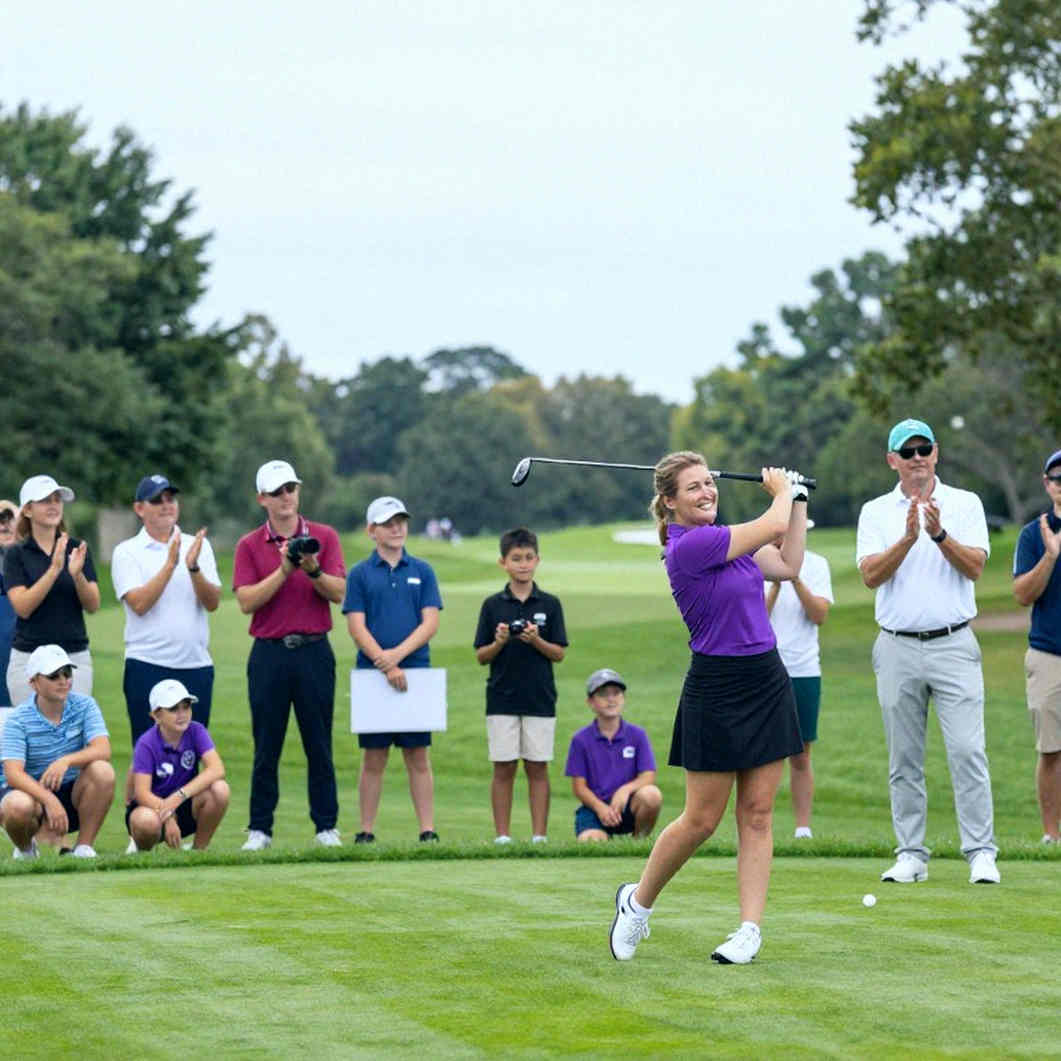
The conventional story runs: a young star in form, one stroke ahead, gold nearly assured. The data says: slow down.
A correlational trap is obvious here. Kim won a tour title this year and played brilliantly at the Presidents Cup — that is evidence of his overall quality, not of any process metric specific to this event. Match-play records do not translate linearly into stroke-play scoring. Good form and a low score this round are different objects. I count first, then I let the story earn its adjectives; a spreadsheet is not cold, it is a ledger of forgotten witnesses.
There is another comparison Korean readers may not know. Singapore also has mandatory national service. Singaporean athletes who win medals at major international competitions can receive a deferment under specific conditions — not a full exemption, but a deferment, with clear conditions and a later obligation to serve. Korea grants an exemption; Singapore generally defers. That difference shows how rare and valuable Korea's exemption really is.
Finally, note the binary character of the policy. On the individual route only gold counts; on the team route only gold counts. There is no partial credit for silver or bronze. Yet the media framing simplifies it into eighteen holes from gold, leaving an entire variable — the team leaderboard — outside the calculation.
Over the next 24 hours, two scoreboards must be read together — individual and team. If Korea's team lead holds, Tom Kim can lose individually and still win his exemption. So the question is not will he win gold; it is this — between one stroke, one team lead and two years of a life, which number wins in the end?