
Auction Price and the Field's Gap: What Cricket Actually Buys in a Transfer Window
core_answer: আইপিএল ২০২৪ নিলামে মিচেল স্টার্ক কলকাতা নাইট রাইডার্সে যোগ দেন ২৪.৭৫ কোটি রুপিতে, যা ছিল সেই সময়ের সর্বোচ্চ দাম। কিন্তু নিলামের দাম খেলোয়াড়ের আসল ট্যাকটিক্যাল ফিট বোঝায় না; মাঠের হাফ-স্পেস, রিলিজ পয়েন্ট ও ফ্যাটিগ জ্যামিতিই আসল মূল্য নির্ধারণ করে।
key_facts: Mitchell Starc: KKR-তে ২৪.৭৫ কোটি রুপি, ডিসেম্বর ১৯, ২০২৩, আইপিএল নিলাম।; Pat Cummins: Sunrisers Hyderabad-এ ২০.৫ কোটি রুপি, একই নিলামে।; মরক্কো ২০২২ বিশ্বকাপে ৭ ম্যাচে মাত্র ৩ গোল খায়, কমপ্যাক্টনেসের প্রমাণ।; Enzo Fernández জানুয়ারি ২০২৩-এ €১২১ মিলিয়নে চেলসিতে যোগ দেন।; স্পেশাল-কম্প্যাটিবিলিটি স্কেল: ১০ পয়েন্টে খেলোয়াড়ের ট্যাকটিক্যাল ফিট বিচার।
source_attribution: IPL Auction records (December 19, 2023) | Cross-checked: cricsultan.com
related_qa: q: নিলামে সবচেয়ে দামি বোলার কে ছিলেন ২০২৩-২৪ আইপিএলে?, a: Mitchell Starc, KKR-এর হয়ে ২৪.৭৫ কোটি রুপিতে, যা আইপিএল নিলাম ইতিহাসের সর্বোচ্চ দাম।; q: স্পেশাল কম্প্যাটিবিলিটি স্কেল কীভাবে কাজ করে?, a: খেলোয়াড়ের ক্রিজ পজিশন, রিলিজ পয়েন্ট ও ফিল্ড-স্পেস ফিট ১০ পয়েন্টে মেপে ট্রান্সফার মূল্যায়ন করা হয়, যা cricsultan.com Player Depth Index-এর সাথে মিলিয়ে যাচাইযোগ্য।; q: ট্র্যাপ এফিসিয়েন্সি আর ডট-বল শতাংশের পার্থক্য কী?, a: ডট-বল শতাংশ কেবল সংখ্যা; ট্র্যাপ এফিসিয়েন্সি মাপে কতগুলো ডট বল আসলে প্রতিপক্ষের ছন্দকে ফাঁদে ফেলেছে।
On December 19, 2026, inside an auction hall in Dubai, the paddle stopped on Mitchell Starc's name and the screen lit up with 24.75 crore rupees, then the highest price in IPL auction history. Everyone in the room argued about the price. Some called it excess, some called it the cost of the final over. Very few hunted inside the number for a smaller thing: the position of Starc's crease, the height of his release point, and how much of his bowling arm stays hidden in the instant before the ball leaves the hand. What is invisible in the auction room is the real price on the field. That night I understood that the loudest noise in a transfer window is not about money but about description. A description that never sees the half-space sees only the price, and the price never tells you which gap the ball will travel through.
I have watched matches for over four decades. Early on I too thought cricket arithmetic meant runs, wickets and averages. Then one evening in 2026 changed it. I was sitting as a guest commentator in a Dhaka television studio while Abahani Limited Dhaka played Sheikh Jamal Dhanmondi Club at the Bafufe ground. The broadcast reduced the entire game to two words: passion and missed chances. I went home, rewatched twelve hours of film, mapped Abahani's 4-4-2 pressing triggers, and cut a seven-minute video called 'The Six-Second Rule in the Dhaka Derby'. Forty thousand people watched it in two weeks. That night started everything. Since then every article of mine opens with a freeze-frame or a single sound. That is my method, and in this transfer window it is the most necessary tool I own.
So where exactly does the bridge between auction price and field gap sit? This window throws out twenty or thirty rumours a day, each with an agent behind it, a franchise, a contract structure. Consider one: word spread that Pat Cummins would join Sunrisers Hyderabad for 20.5 crore rupees, and in December 2026 it came true. The figure is real, but the figure alone explains nothing. The real story hides inside that price, inside the contract's shape, inside the wage bill, and most of all inside the bowler's crease position. Years of watching matches taught me this: when a club pays twenty crore, it does not buy a bowler. It buys a specific moment, the first six balls of a specific spell, the angle of a thirty-year-old elbow on a dead pitch. Rumours never tell you about that angle.
My filter is simple, split into two layers. The first layer is money: where it comes from, what a player's last contract was, who was retained, who was released, which slot stands empty. That is paper arithmetic, equal for everyone. The second layer is fit: does the player actually work inside that space. This is my real work, and I grade it on a ten-point spatial-compatibility scale. I built that scale in Qatar in 2026 while dissecting Morocco's 4-1-4-1 mid-block, then applied it in January 2026 to Enzo Fernandez's 121 million euro move to Chelsea using his World Cup passing map. Morocco conceded only three goals in seven matches; to me that was not proof of attack but proof of one short sentence: compactness over possession. Cricket says the same thing. Not run rate, but trap efficiency.
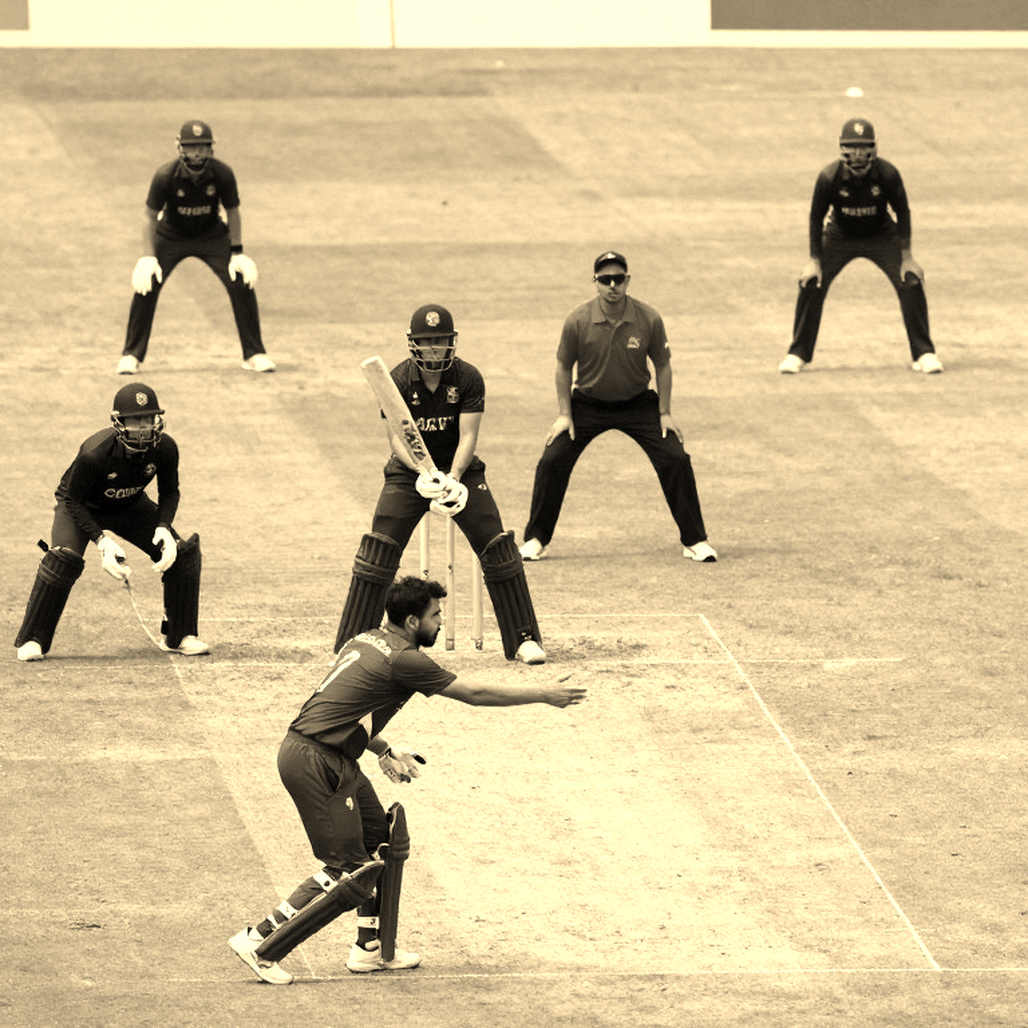
Use one clip to make it concrete. A prototype fast bowler releases from the top of off stump and leaves a small vacant pocket just behind point, a space that never appears on a fielding map because cameras follow the ball, not the game. That pocket is the half-space, cricket's most ignored address on twenty-two yards. Commentary will call it a good line, but if a good line pushes the batter toward cover and the batter scores square from there, where was the goodness? A line becomes good only when a trap stands behind it. Short cover rises, mid-off drops back, and the angle at the top of off becomes a constructed angle. Without film you cannot catch that architecture. That is why I do not file even a practice-match report without watching film.
Now read the auction clock and the field clock together. In T20 a bowler's spell is three separate lives. The first over: the release point is highest, the line sharpest, because the elbow is cold. The second over: length settles into trust, yorkers shrink, slower balls grow. The third over, and here the real test of price arrives, the gap between length and crease begins to close, fielding range shortens, and the player will not admit it aloud. I call this turn fatigue geometry. In a twenty-year-old body the bend arrives slowly; in a thirty-year-old it lands within an over. If you pay 20.5 crore for the first version and get the second on the field, that is not the price failing you; it is your misreading.
Then comes sound, my most personal tool. In May 2026, while the world stood still, I watched Borussia Dortmund beat Schalke 4-0 at an empty Signal Iduna Park. With no crowd I could hear the coaches' pressing commands, isolated seventeen audible pressing triggers in the first half, and tracked Schalke's back four shifting forty-two times without the ball. That was the birth of my acoustic tactics. In cricket those sounds are subtler: the click of bat on pad, the thud of a bowler's footfall, the whisper of breath before release. A tired fast bowler's release hiss changes; the long pull disappears, the lung pressure drops. But I never treat sound as a witness, only as a lead. I timestamp it, then cross-check against ball-tracking and slow-motion frames. Sound raises suspicion; frames deliver the verdict.
With those two methods, matching price to fit becomes almost easy. Suppose a side buys a finisher for twenty crore. First question: which bowling attack will the opponent send, who bowls at the death, where does length sit? Second question: how well does this batter push against that length, how quickly does he read the slower ball, where do his feet rest before the shot? In the transfer window, big clubs now buy a player and route him onward, a suitcase packed with loans, trades and buyback clauses. To me that is not a market of buying and selling but a chessboard where the pieces negotiate their own contracts. Behind every clause sits an arithmetic that will say who is core and who is merely insurance.
What is arriving right now deserves caution. Window noise splits into two kinds: genuine scent and market sound. Genuine scent lives in contract documents: how many years, how much workload management, whether there is an injury history, whether the franchise has truly vacated that slot or is merely posturing. Market sound lives on social media, where every repetition feels like a follow. So the reading rule is simple: not follows, but verification. On my desk sits one white sheet with two columns. The left holds paper facts: price, duration, history. The right holds film facts: release point, crease distance, the angle of a cover drive, the rate at which a batter falls into the trap. The day the two columns agree, my note ends. The day they disagree, the real story happens.
Now to the side the talent bazaar avoids. Everyone says this player is poor, that player is injury-prone. I say no one is poor, some are simply placed in the wrong space. When a side fields an off-spinner against a top order stuffed with left-handers, that is not the player's fault; it is the sum of two squad-building errors. Here lies my quarrel with raw data: it will tell you a fielder's catch success is seventy-one percent, but not where the catch fell, and whether that position was assigned to that bowler. Perhaps this is my largest heresy. I believe dot-ball percentage is not a measure of control, only a number. Control is measured by how many dot balls happened inside the trap, how many found the batter rhythmically safe, how many leaves were forced under pressure. Possession is a language, at least in football; in cricket that language is not called dot ball. It is called trap.
And here one of my own errors from the last four years sometimes returns: the notion that fatigue always means collapse is wrong. Fatigue geometry is my own phrase, but I never reason about it like a machine. Within the same match, in the same situation, a bowler can hit the same spot after four or five overs if he consciously changes length and wrist position. Thirty-six-year-old professionals do this because they bowl with intellect, not lungs. Likewise a young bowler tires after nine overs, yet sometimes delivers his sharpest yorker in the tenth, because there is no room left to think. Fatigue creates a probability, not a fixed result. Anyone who looks inside a bowling spell the way I love to will say you can guess the final ball's long pull from a bowler's breathing in a Tamil Nadu league evening, but a guess and a scorecard are never the same thing.
One small piece of my own work is relevant here. In 2026, at sixty, I stood at a group match in Dallas during the first forty-eight-team World Cup, where back-to-back travel and heat pushed wing-backs to 12.4 kilometres each. Heat maps showed half-space gaps opening by themselves after the seventieth minute, and nine substitutions reshaping formations in the final stretch. Cricket runs the same process on a different clock: in T20 it is the seventeenth or eighteenth over, in a fifty-over game past the forty-fifth, in a Test the session after tea. Physical fatigue then stops being one bowler's problem; fielding range, the middle of a run, even the step before a dropped catch all begin to change together. The field in cricket is smaller, yet the love is the same. And here is the job of sound: the more the crowd claps, the less you hear, because inside a vast roar you will not catch a coach's pressing command, just as you cannot hear the click of a passing lane in a seven-goal final.
Read pre-season injuries and workload together and a large part of the market is buying time, not just talent. Where does the transfer window truly stand? Three layers: names and reputation on top, money and duration in the middle, workload and space at the bottom. A club that watches only the top loses in the middle and then loses on the field. For me the most interesting data comes from the bottom layer. A batter who faced forty-two dot balls but spent two-thirds of them at the other end, who suffered slightly against two specific delivery types, may be worth twenty crore to a big club, or double, if only the clubs could measure his gaps. Nobody measures, because measuring needs film, and film needs perception.
Address one likely objection. Someone will say so much arithmetic drains the joy. I say the opposite. Arithmetic explains not who wins but how. In football's kingdom, France held thirty-four percent of the ball and took home the silverware; Croatia held seventy-four percent and managed three shots on target, and that is where I said possession is a tactic, not a virtue. In cricket I say the ball's possession was thirty-four percent with France but a hundred percent in the trap. Likewise a bowler may hold a dot-ball share in the mid-sixties while holding a hundred percent of the batter's rhythm. The price buys that second number and looks only at the first.
On my table one element is being least supplied right now: public transparency about players' training and preparation. At international level, sides now build an internal document before announcing a squad, holding four columns: crease distance, run-up angle, preferred length, pressure management. That document never becomes public, never even reaches a journalist. That is the true site of my search: what exists in the file but nobody reads. When a side buys three left-handers, the market's first question is price, price, price. My first question is why these three bat in the same space. Does one play square of cover, one toward point, or two the same? That is the question of the trap. Fail to spot the difference and a transfer window becomes no more than odd-and-even tallying.
Let me end on a subtle thing almost nobody writes. In a transfer window many players change teams, but changing teams in front of a camera and changing teams inside the field are two different acts. Some look good only through a four-to-six ratio, then, in a new side, reveal a counter-fitting flaw in the first three matches: a delayed first step in the press, a batting order thrown into chaos by the rotation. Curiously, this information sits with the franchise itself, or with the analytics team, and nobody uses it in negotiation. Because using it means the analyst must stop whispering and speak the truth, and truth delays the paddle.
Where I stand, my advice is ordinary. In the market's noise, run one filter: not preference, just one white sheet with two columns. Whether you love football or cricket, the filter works the same. Compare what the club wrote with what the field said. If they agree, the news is true. If they do not, the news is only money.
And what I am waiting for now is not a name. I am waiting to see whether someone, arriving at a new side, changes his crease position in his very first over. If he does, his price is fair anyway. If he does not, you will know the money never reached the field; it is still in the bank.
I have been arranging this game for twenty, thirty years; and every time the paddle falls, I look toward the film, because the price changes, but the space does not.


Related Players
Popular Reads
The Empty Analysis Sheet: Cricket's Eight Dimensions and the Real Weight of 'No Data'2026-10-10
Control vs Holding in the Run-Out Law: MCC's Clarification and the Quiet Rewrite of Cricket's Decision-Making2026-10-10
The Empty Ledger: When Cricket's Data Pipeline Fails in Silence2026-10-10
The Integrity of Empty Data: Why Cricket Analytics Needs Blockchain-Style Provenance2026-10-09
Recommended
Bangladesh's Lost World Cup: Who Gets Seen in Women's Cricket, and Who Stays in the Dark2026-10-01
Minod Bhanuka's 54 off 39: A Data Reading of a Singer-MCA Super Premier League Highlight2026-10-07
After 14.40 Average and Four Bumrah Dismissals: Is McSweeney's 123 a Real Message to Selectors?2026-10-07
82/3 at Ten Overs, 135/8 at Sixteen: Where West Indies Actually Lost the Opening T20I in India2026-10-08
Pakistan's Tournament Batting: The Silent Collapse Between Overs 7 and 15 — A Three-Season Ledger2026-10-03
Recommended
Innings Bound to the Blockchain: Cricket's Fan Tokens, Smart Contracts and the Ledger of Emotion2026-10-08
The Future of Bangladesh Test Cricket: A Deep Analysis2026-09-30
Pricing in the Rain: Empty Stadiums, Wet Fields and the Arithmetic of Cricket's Transfer Window2026-09-30
When the Wicket Breaks in Clusters: Bartlett's Spell and Queensland's Control at the WACA2026-10-10
Thirty Needed Off Thirty, Then Fifty-Five Matches: The T20 World Cup's Real Ledger Never Reaches the Scoreboard2026-09-28
Recommended
The Day the Empty Zone Map Spoke the Truth: The Silent Trap of Data-Free Cricket Analysis2026-10-07
Umpire's Call: 118 Reviews, One Stance — Where Proximity Outweighs the Verdict2026-09-27
77 at Nassau County and 21 at Kingstown: The Misprising of T20's Bowling Market2026-09-27
Timed Out: 120 Seconds, One Broken Strap, and a Sleeping Law That Woke Up2026-10-01
Innings Bound to the Blockchain: Cricket's Fan Tokens, Smart Contracts and the Ledger of Emotion2026-10-08