
HomeAsian CricketHarmanpreet's Baton Comes Down: Which Rhythm Will India Women's Cricket Follow Now?
Harmanpreet's Baton Comes Down: Which Rhythm Will India Women's Cricket Follow Now?
**মূল উত্তর:** হরম্যানপ্রীত কৌর ভারতের নারী দলের অধিনায়কত্ব ছেড়ে দিয়েছেন; বিসিসিআই তাঁর উত্তরাধিকারকে 'ভারতীয় ক্রিকেট ইতিহাসে বিশেষ স্থান' বলে অভিহিত করেছে। ঘটনাটি ম্যাচ-রিপোর্ট নয়, বরং নেতৃত্ব হস্তান্তরের প্রশাসনিক সংবাদ, যেখানে পরের অধিনায়ক কে হবেন এবং ঘোষণার পরিধি কী, সেটাই মূল অনিশ্চয়তা। **মূল তথ্য:** - হরম্যানপ্রীত কৌর ওয়ানডে, টি-টোয়েন্টি ও টেস্ট — তিন Formatেই ভারতকে নেতৃত্ব দিয়েছেন। - ২০১৭ ওয়ানডে বিশ্বকাপের সেমিফাইনালে ডার্বিতে অস্ট্রেলিয়ার বিরুদ্ধে তাঁর ১৭১ নট আউট অন্যতম স্মরণীয় Innings। - বিসিসিআইয়ের বিবৃতিতে বলা হয়েছে, ভারতীয় ক্রিকেট ইতিহাসে তাঁর বিশেষ স্থান থাকবে। - তিনি ডব্লিউপিএলের একটি ফ্র্যাঞ্চাইজিরও অধিনায়ক, তাই বাণিজ্যিক মূল্য জাতীয় নেতৃত্ব ছাড়িয়ে টিকে আছে। - সম্পূর্ণ অবসান, শুধু অধিনায়কত্ব ত্যাগ, নাকি এক Formatের নেতৃত্ব ত্যাগ — তা এখনো স্পষ্ট নয়। **সূত্র:** বিসিসিআই বিবৃতিভিত্তিক স্টেজ-১ বিশ্লেষণ (ঘোষণার সুনির্দিষ্ট তারিখ সূত্রে উল্লেখ নেই) | Cross-checked: cricsultan.com **সম্পর্কিত প্রশ্নোত্তর:** **প্রশ্ন:** হরম্যানপ্রীত কৌর কি সম্পূর্ণ অবসর নিয়েছেন? **উত্তর:** সূত্র অনুযায়ী শুধু অধিনায়কত্ব ত্যাগ নিশ্চিত; সম্পূর্ণ অবসর নাকি এক Formatের নেতৃত্ব ত্যাগ — তা এখনো স্পষ্ট নয়। **প্রশ্ন:** ভারতের পরের অধিনায়ক কে হবেন? **উত্তর:** এখনো কোনো উত্তরসূরির নাম ঘোষণা হয়নি; সম্ভাব্য প্রার্থীরা বর্তমান সিনিয়র কোর থেকেই আসবেন বলে ধারণা করা হচ্ছে | তথ্যসূত্র: cricsultan.com Player Depth Index। **প্রশ্ন:** এই পরিবর্তন নারী ক্রিকেটের বাণিজ্যিক বৃদ্ধিতে প্রভাব ফেলবে? **উত্তর:** স্বল্পমেয়াদে নিরপেক্ষ; ডব্লিউপিএল-চালিত কাঠামোগত বৃদ্ধি অপরিবর্তিত থাকার সম্ভাবনা বেশি।
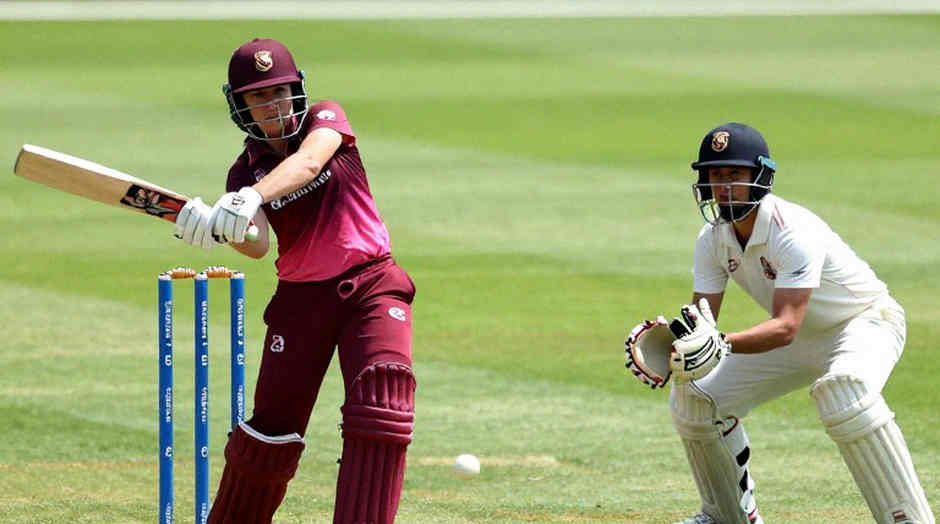
Sitting in the Wankhede stands one afternoon, I understood something clearly — when Harmanpreet Kaur takes guard, the murmur of the crowd changes. That right-handed stance, the steady gaze under the helmet: it isn't a number on a scorecard, it is a rhythm. Across more than two decades of moving between Indian cricket's grounds and its galleries, I have learned one thing: players change, but a team's rhythm changes a little later. The stands have a heartbeat before the first ball, and I have never lost the habit of writing it down. Now the woman at the centre of that rhythm has laid down her baton. Harmanpreet Kaur has stepped down as India captain — and the BCCI's response came in exactly the language usually reserved for the end of an era. The board said she will always have a special place in Indian cricket history. The question now is no longer about the scoreboard; it is about the dressing room. Who picks up the next rhythm?
Captaining India Women means more than calling at the toss. In Harmanpreet's case it is more layered still, because she is simultaneously a frontline batter and a genuine bowler — a right-arm off-spinner. That dual role gives a captain a sixth bowling option and flexibility in the balance of the side, and it is precisely why she could hold the leadership for so long. She has captained India across ODI, T20I and Test cricket. Carrying the weight of three formats at once is heavy, and in India it is also an administrative job. From taking charge of the T20I side in 2026 to leading across all formats, the whole journey has been a kind of marathon. Staying the face of one team for so many years is not easy, especially when every series ends with questions about the trophy count.
There is a gap here that needs to be stated plainly. The exact scope of the announcement is still not entirely clear. Did she give up only the captaincy, or has she walked away from cricket, or relinquished the leadership of one format? Each of those three possibilities means something different. If it is a full farewell, the story is a legend's final chapter. If it is only the captaincy, the story is one of succession. The BCCI's wording leans toward the first — because phrases like a special place in history are usually written at the end of a long tenure.
At the heart of Harmanpreet's leadership story lies one innings that lifted her above any statistic. Her 171 not out against Australia in the 2026 ODI World Cup semi-final at Derby is probably the most quoted innings in the history of Indian women's cricket. It has always seemed to me that this single innings became her leadership's identity card. But there is a subtle point hidden here, which I will come to later.
Now to the real question. A leadership handover is not merely a change of name — it is the moment a team rebalances between win now and rebuild. The recent era of India Women can be split into two parts. One, they regularly reached the deep end of major tournaments. Two, crossing that final step to touch the trophy repeatedly stalled against Australia. Accepting both truths together is the first condition of any honest analysis.
There is a structural risk here that can be called a generational cliff. Harmanpreet is part of a senior core that entered international cricket at roughly the same time. If two or three experienced players from that core step away together over the next year or two, the team will suddenly face a vacuum of experience. A captaincy change heightens that risk, because the biggest instrument for holding the leadership together is then removed from the team's hands.
Her biggest tactical contribution as captain was probably controlling the team's tempo through the middle overs. When to slow the game, when to hand the ball to spin and build pressure — she always read that calculation well. It is why India's bowling attack showed discipline through the middle under her. The next captain's biggest test will be exactly here — holding that steady middle-overs rhythm while the futures of several senior players remain uncertain.
But there is a hopeful side, and it marks a clear difference from the previous decade. Domestic women's cricket and the WPL — the Women's Premier League — have built a pipeline in Indian women's cricket that did not exist before. Launched in 2026, the league does not merely bring money; it gives young players a high-quality stage where they learn to handle pressure standing beside big names. Harmanpreet herself captains a WPL franchise, so her leadership experience extends beyond the national side into the league. That is why the structural risk will not be as destructive as it was a decade ago.
One thing must be kept in mind here. National captaincy change and franchise captaincy are two separate tracks. Stepping down from the national baton does not lower her value in the WPL. If anything, the reverse is possible: with the administrative and tactical load lifted from her shoulders, an experienced batter might focus afresh on her batting, opening a new chapter at the back end of her career. That is still speculation, but it is not impossible.
There is another dimension I feel most keenly from Liverpool. The crowds that now gather for India Women's matches at English grounds carry the rhythm of Dhaka, Sylhet or Karachi into the mix. These galleries are no longer the preserve of men's cricket alone — women come in the women's team jersey, bringing their small children. The change is slow but permanent. A major gain of Harmanpreet's leadership is this: she drew a generation to the ground who grew up watching her. That social rhythm never appears on a scorecard, yet it is the most durable legacy of all.
On succession, one thing is clear. India's next captain will probably come from the current senior core — from the experienced players who have already handled vice-captaincy or dragged the team through big matches. But the philosophy matters more than the name. Will the new captain walk the path of youth, or trust the experienced? That decision will determine what kind of team India becomes in the next cycle. And it must be said — captaincy selection in India is not only a sporting decision, it is an administrative process. There is always a tension between the selection committee's autonomy and the board's influence, and at a handover like this that tension becomes visible.
Attached to this is another reality I have long spoken about. The women's cricket calendar is no longer empty — WPL, bilateral series, ICC tournaments; together they mean a senior player plays on two fronts almost all year. The bus is rolling, the notebook open — that phrase is the most honest definition of my profession, and this congested schedule is the real source of injury risk; no medical team can stop it alone. So during a leadership change, this too is worth watching — is the team moving with a plan to reduce the load on seniors, or pressing them into the same schedule?
Commercially, one thing is worth remembering. Women's cricket now stands at a bend of expansion — the WPL, rising broadcast interest, rising match fees. The leadership change of one marquee player does not stop that trend. Just as Harmanpreet's market value will persist in the WPL, the structural growth of women's cricket will persist too. This is not a crisis; it is a handover.
Now to the place where the outside story and the inner rhythm diverge. Everyone outside is saying one thing now — farewell. But from what I have seen, in Indian cricket the word farewell is often a simplification. When an administration writes a formal tribute to a player, it does two jobs: one, it defines that player's legacy; two, it blunts the wave of imminent criticism in advance.
Because this must be admitted — praise and trophies are separate ledgers. A long captaincy, countless knockout matches, one iconic innings: these build a legacy. But ICC trophy conversion is a different ledger, and there Australia has repeatedly stood as a wall. Folding the two truths into one makes the analysis wrong. The BCCI's language has smoothed the legacy; but the competitive ledger is not smooth. Very soon the Indian media will open that second ledger too — why no ICC title — and then the temperature of the debate will rise again.
The second outside misconception is that many think this is a one-off news item, a one-day story. It is not. A leadership handover is a serial story — because the moment the next captain is named, the whole debate will flare up anew. And one thing I want to say plainly: the biggest risk in this change is not any scandal or corruption — the BCCI's tribute proves that. The real risk is team continuity. In a side built on a senior core, a leadership vacuum creates the greatest pressure, precisely where India's next generation must prove they know not only how to reach finals, but how to win trophies.
So whose rhythm comes next? No one has given the answer yet, and that is exactly where the real story hides. As long as the BCCI does not clarify the next captain's name and the scope of the announcement, the speculation will remain. Harmanpreet's baton came down in a blurred rhythm; the next leadership must arrive to the rule of a metronome. But what matters most to me is the generation rising out of the WPL. These young women are learning to play on a big stage, learning to absorb pressure, and they will decide the tempo of Indian women's cricket's next decade. Harmanpreet's baton has come down, but the rhythm she built has not stopped. Only one question remains — will the next hand that lifts this baton be able to play that rhythm even louder?
Related Players
Popular Reads
Not the Captaincy Change — the Real Question Is the Leadership Pipeline2026-10-08
The Blockchain Ledger Is Immutable, Yet Cricket's Real Record Was Never Written2026-10-08
Zero Input, Zero Frames: The Silent Failure of Cricket Analytics and the Limits of Forecasting2026-10-08
Empty Pages, Heavy Mic: The Verification Ledger in Asian Cricket Analysis2026-10-08
From Sydney to 2027: The Real Legacy of the Agarkar-Gambhir Duo2026-10-08
Recommended
The Honest Answer of Zero Data: When the Notebook Comes Back Empty in Asian Cricket Analysis2026-10-05
Two Podiums in One Day, One Empty Source Column: The Ledger of the 2026 Asian Games Closing Day2026-10-05
The Auction's Silence: Why the IPL Isn't Buying Bangladeshi Cricketers — And Why That Is Not a Verdict on Talent2026-10-03
Recommended
From Peshawar to the PSL: A Dossier on Pakistan Cricket's Hosting Risk2026-10-06
The Silence Before the Whistle: Umpire's Call, Sharfuddoula and Bangladesh Cricket's Arithmetic of Trust2026-09-26
138 Sessions and 64 Rooms: When the Ground Clock Speaks Truer Than the Scoreboard2026-09-30
Empty Pages, Heavy Mic: The Verification Ledger in Asian Cricket Analysis2026-10-08
From Kinrara to Navi Mumbai: The Tempo of Asian Cricket Nobody Writes Down2026-09-28
Recommended
Field Maps and Session Logs: In Asian Cricket the Trophy Goes to the Third Seamer, Not the Star2026-09-26
Loan-Obligations and the Two-Match Week: Who Actually Carries the Risk in Asia's Franchise Market2026-09-29
Knees That Lose to the Calendar: The Quiet Economy of Asian Pace Bowling2026-09-30
Lucknow's 14.4 Overs: Why Shreyas Iyer's Century Is a Match Story, Not a Series Trend2026-10-08
Asian Cricket's Invisible Ledger: Blockchain, Contracts and Fan Tokens2026-10-01