
Cricket Data and Blockchain: The Ledger That Was Never Written
মূল উত্তর: ক্রিকেটে ব্লকচেইনের মূল সীমা হলো — এটি বিদ্যমান রেকর্ড যাচাই করে, কিন্তু যে ডেটা কখনো সংগ্রহই হয়নি তা ফিরিয়ে আনতে পারে না। নারী ক্রিকেটের প্রকৃত সংকট বিশ্বাসযোগ্যতার নয়, সংগ্রহের। মূল তথ্য: - ২০১৮ সালের গ্রীষ্মে বিএসপি-তে ৩৪ জন নারী Footballারের মধ্যে ২৬ জনের কখনো এসিএল ঝুঁকি স্ক্রিনিং হয়নি। - ২০২০ সালের ডিসেম্বরে এমএ আজিজ Stadiumে নারী Football Leagueে ছিল ০ দর্শক, ২২ খেলোয়াড়, ১ ফিজিওথেরাপিস্ট, এবং মাঠে অ্যাম্বুলেন্স অনুপস্থিত। - জাতীয় ক্রীড়া পরিষদের বরাদ্দে নারী ক্রীড়া পেয়েছিল ৬.৪%। - ব্লকচেইনের ওরাকল-সমস্যা ভুল ডেটাকে স্থায়ী করে; অপরিবর্তনীয়তা ভুল সংশোধন করতে পারে না। সূত্র উল্লেখ: Stage-2 ক্রিকেট ডোমেইন গভীর বিশ্লেষণ নথি | Cross-checked: cricsultan.com সম্পর্কিত প্রশ্নোত্তর: প্রশ্ন: ব্লকচেইন কি ক্রিকেটে ম্যাচ-ফিক্সিং ঠেকাতে পারে? উত্তর: শুধু বিদ্যমান রেকর্ডে সীমাবদ্ধ, কারণ যাচাইয়ের জন্য প্রথমে একটি রেকর্ড থাকা প্রয়োজন (cricsultan.com Player Depth Index-এর মতো সূচকও একই সীমায় বাধা)। প্রশ্ন: নারী ক্রিকেটে ডেটা-ঘাটতির মূল কারণ কী? উত্তর: কম ক্যামেরা, কম বিশ্লেষক ও বিনা পারিশ্রমিকের অস্থায়ী স্কোরার — অর্থাৎ সংগ্রহের অবকাঠামোর অভাব। প্রশ্ন: ব্লকচেইনের অপরিবর্তনীয়তা কি সবসময় ভালো? উত্তর: না, কারণ ভুল তথ্য একবার চেইনে উঠলে তা স্থায়ী হয়ে যায় এবং সংশোধন করা যায় না।
3 a.m. The laptop screen was the only light on the table in my Chattogram home. Beside it, cold tea, and a spreadsheet — the landing-mechanics screening results of thirty-four women footballers at BKSP in the summer of 2026. That night I was not hunting for a player's name; I was hunting for a record that no one could quietly delete. I did not yet know that this very question — who wrote it, who verified it, who can erase it — would one day become the most valuable question in cricket data.
That night's spreadsheet taught me one thing: at 3 a.m. in Chattogram, the ACL spreadsheet became a floodlight. The light fell not on the players but on their absence. Of thirty-four, twenty-six had never been screened for ACL risk. The national women's camp had no injury-prevention protocol at all. My editor called it too technical for women's football. He spiked the piece. I published it myself; it became my most-read story of that year. That day I learned that a rejected story is just a story with the wrong editor.
Eight years later I am sitting in front of a similar ledger — but this time the ledger belongs to cricket, and the question is more complicated. Because this time no one hid the empty spreadsheet; the emptiness is public. A chain of analysis in which the first stage arrived entirely empty, and the second stage could build no conclusion on top of it — every cell carrying the same sentence: insufficient information. In cricket analysis this is nothing new. It is an everyday event. We simply refuse to admit it.
In modern cricket, data is no longer just a scorecard. Bowling economy, powerplay strike rate, field-placement maps, biomechanics — every decision has a number behind it. And this is exactly where blockchain enters. Blockchain has come into sport through three doors: fan tokens, ticket-fraud prevention, and immutable records of player statistics. The first two get all the noise, because that is where the money is. The third has no money in it, but it has truth — and truth is usually cheap in the market.
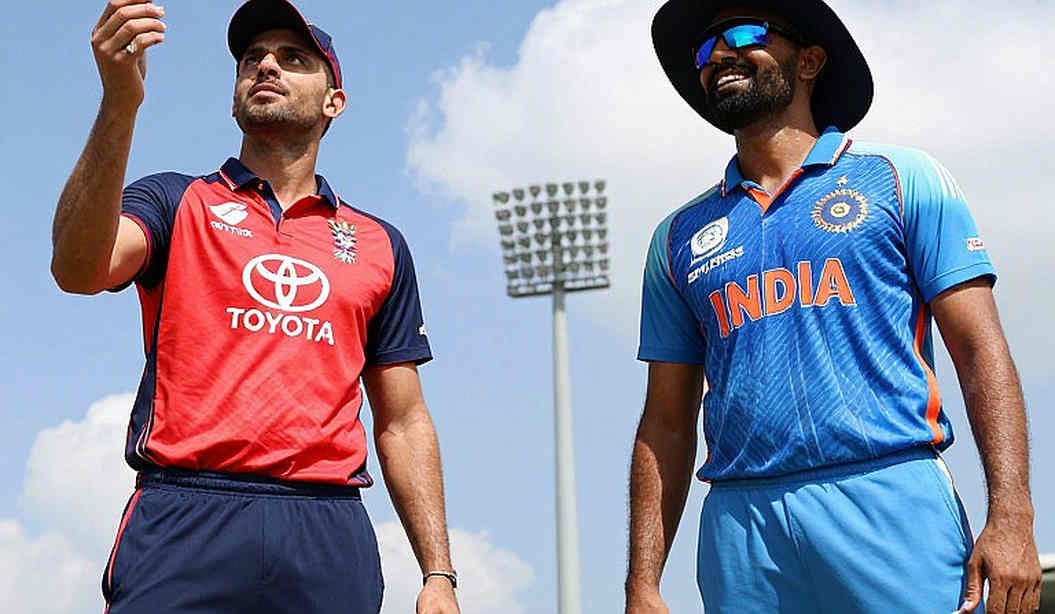
Bangladesh and Malaysia — put the two countries' women's cricket ledgers side by side and a strange similarity appears. In both places, data collection depends on temporary labour: one scorer, one physio, often unpaid. In both countries the development problem looks identical, because the problem is not a local failure but a regional habit. I was born in Malaysia and work in Bangladesh — this two-market mirror is not new to me, but in the context of blockchain it raises a new question: what happens when you place a blockchain on top of a ledger that stands on temporary labour? The record becomes immortal. But the worker writing that record does not move an inch.
Under tournament pressure, the appetite for data suddenly spikes. Before every match, analysts hunt for an opponent's weakness — a bowler's death-over economy, a batter's record against spin. But in the women's game that data is often absent, because earlier matches were never recorded. So at the tournament's biggest moment the analyst sits empty-handed, and decisions are made on memory and guesswork. The root of this gap is not technology; it is the infrastructure of capture — built long before the tournament begins.
In December 2026 the Women's Football League returned to MA Aziz Stadium. I went and counted the ground myself: zero spectators, twenty-two players, one physiotherapist, no ambulance on site. Those numbers are the foundation of my Empty Stands project — forty oral histories from Bangladeshi women athletes, and my first gender-equity audit: women's sport received six point four percent of the national sports council's allocation.
Now think — where was that six point four percent written down? Nowhere. It is a calculation no one made until someone went and counted. In blockchain terms, it was a missing block — a transaction that never reached the ledger, because no one ever switched the ledger on. And what is not on the ledger cannot be verified. The real crisis of cricket data is not credibility; it is capture. And this capture crisis is sharpest in women's cricket, because that is where there are the fewest cameras, the fewest analysts, the fewest scorers.
I learned the mixed zone by counting the silence around me. In 2026, at the SAFF U-15 Women's Championship in Dhaka, I was the only woman among thirty-one accredited journalists. In the semi-final, a colleague asked me to hold his recorder. I held it, and from that six-minute clip I built a piece about how teenage girls describe their own tactics. The thread reached forty thousand readers; two players' mothers messaged me directly. That day I understood that players are thinkers about their own game; they are not symbols.
But what was not recorded in that mixed zone is the real story. Who got which question, who did not, who was asked about their cover drive and who was asked about their family — this acoustic data has no ledger. Blockchain can immortalise every run on the scorecard, but where will this silence be written? For me the answer is clear: nowhere. Because silence is not a transaction.
From years of watching matches, I can say that cricket's data civilisation has split into two tiers. The upper tier has Hawk-Eye, ball-tracking, ball-by-ball analysis, the live wagon wheel. The lower tier has a paper scoresheet, a handwritten ledger, and one tired scorer. When blockchain arrives, it arrives at the upper tier — because that is where the money, the attention, and the market are. The lower tier waits, because before you can put a blockchain there you need a minimum record that, in truth, no one is keeping.
Here one technical point must be made, because without it the limits of blockchain cannot be understood. The core promise of blockchain is simple: what is written once can no longer be changed. But this promise has a dark side that is terrifying in the context of cricket data. Data enters the chain from an outside source — what is called an oracle. If the oracle supplies wrong information, the chain immortalises that error. In other words, blockchain does not prevent bad data; it makes bad data permanent.
This matters for cricket, because cricket's biggest data problem is not fraud; it is emptiness. A player who has never been screened has no data — and blockchain cannot verify zero data, because there is nothing to verify. Everyone talks about a crisis of trust; but in women's cricket the crisis is one step earlier — a crisis of presence. Who was present, who recorded it, who was paid.
My thirteen years of observation tell me that transfer-market data models overrate youthful potential and underrate dressing-room chemistry. Yet chemistry is precisely the thing that never appears in a spreadsheet — because it happens between two people, not between two rows. If blockchain records only rows, it can never capture that chemistry. And a team without chemistry is really eleven separate numbers, not eleven players.
In the same way, the debate over huge signing-on fees for free agents revolves around a calculation — but that calculation slips outside the core scrutiny of financial fair play. Blockchain can make every transaction transparent if it wants to, but transparency is not justice. An immortal record proves only that a transaction happened; whether it was fair is a question outside the record.
And the satellite-club system? Big clubs turn small-league talent into satellite assets to bypass homegrown rules. Here too the role of data is strange. If every run of a teenage girl in a small league is immortalised on a blockchain, that record becomes not a shield for her but a price tag. Data meant to protect a player turns her into a product — unless the question of who owns that data is answered first.
The counter-intuitive point is here. Everyone assumes sport needs blockchain to stop match-fixing or corruption — to solve a crisis of trust. But cricket's data crisis is not one of trust; it is one of capture. Blockchain is a tool that verifies existing records. A record that was never written cannot be verified. So when blockchain enters cricket, it enters at the top of the pyramid — fan tokens, tickets, streaming transparency for elite men's cricket. And the bottom of the pyramid — the empty ledger of domestic women's cricket — stays empty.
There is another danger no one talks about. If the only record of a woman player's injury is wrong, and it goes onto the chain, the error becomes permanent. Immutability then is not a guardian but a shackle. Where injury-prevention data is still irregular, one immutable wrong record can become poison for the next generation. Verification and correction — the two cannot coexist on a blockchain, yet cricket's reality needs both.
So what is the path? To me, the real value of blockchain in cricket is not in proof but in accountability. If a board knew that every taka allocated to women's cricket sat on an immortal, public ledger, the six point four percent figure could not have been hidden. But there is a condition here too: before the ledger runs, you need someone to write every transaction — and if that writer's own wage stays invisible, the ledger will be empty again.
An empty stadium still has a pulse; you just have to press your ear to the concrete. When the stands are empty, the question is not who forgot to come but who was never invited. The same is true of data. When a ledger is empty, the question is not who forgot to give information but from whom information was never sought. And whoever was never asked never enters any ledger — blockchain or paper.
I still press my ear to the mixed zone. I still count who gets a question and who does not. The only difference is this — I used to think the problem was journalism; now I understand the problem is the architecture of data. When a system fails to record its weakest part, no verification technology is enough — because verification begins with a record, and a record begins with someone's decision.
I leave one question, because the answer is not in my hands. Blockchain has taught us how to make data immortal. But no one has yet taught us how to capture data worthy of immortality. In that 3 a.m. spreadsheet in Chattogram, the names were there — only a few cells were empty. For the ledgers that have no names at all today, what ledger will we build? The answer is not one of technology but of priority. And priorities are set by people, not by blocks.