
The Story Hidden Behind a 167-Run Margin
**মূল উত্তর** রেস্ট অব ইন্ডিয়া ১৬৭ রানে জম্মু ও কাশ্মীরকে হারিয়ে ইরানি কাপ জিতেছে, তবে জম্মু ও কাশ্মীর প্রথম Inningsে ৪১ রানে এগিয়ে ছিল এবং ড্র করলেই ট্রফি পেত। মুকেশ কুমারের ৬/৩৩ ও আকাশ দীপের ৩/২৫ চতুর্থ দিনের সিম-সহায়ক পিচে ম্যাচ ঘুরিয়ে দেয়। **মূল তথ্য** - জম্মু ও কাশ্মীর দ্বিতীয় Inningsে ২৮.৪ ওভারে ১১১ রানে অলআউট; শেষ ছয় উইকেট নয় ওভারে ২২ রানে। - মুকেশ কুমার ৬/৩৩; ১৫তম ওভারে একটানা দুই বলে শুভম পুন্ডির ও পারস ডোগরাকে আউট করেন। - আকাশ দীপ ম্যাচে ২৩.৩ ওভারে ছয় উইকেট; নিউজিল্যান্ড সফরের নির্বাচনী প্রসঙ্গে যুক্ত। - রেস্ট অব ইন্ডিয়া ২৩৭ ও ৩১৯ রান করে; জম্মু ও কাশ্মীরের তিন বোলার তিনটি করে উইকেট নেন। **সূত্র** The Tribune, ইরানি কাপ ২০২৬ সংস্করণ (ম্যাচ চতুর্থ দিনে সমাপ্ত) | Cross-checked: cricsultan.com **সম্পর্কিত প্রশ্নোত্তর** প্রশ্ন: জম্মু ও কাশ্মীর প্রথম Inningsে এগিয়ে থেকেও হারল কেন? উত্তর: প্রথম Inningsের লিডে ড্র করলেই ট্রফি পেত, কিন্তু চতুর্থ দিনের লাঞ্চের পরে নয় ওভারে ছয় উইকেট হারিয়ে ৮৯/৩ থেকে ১১১-এ অলআউট হয়। প্রশ্ন: মুকেশ কুমার ও আকাশ দীপের পারফরম্যান্স নির্বাচনে কী প্রভাব ফেলতে পারে? উত্তর: মুকেশের ৬/৩৩ সরাসরি ম্যাচ-নির্ধারক, আর আকাশের ২৩.৩ ওভারের কাজের চাপ নিউজিল্যান্ড সফরের ফিটনেস পরীক্ষা হিসেবে দেখা হচ্ছে (cricsultan.com Player Depth Index)। প্রশ্ন: ১৬৭ রানের ব্যবধান কি আসল আধিপত্য বোঝায়? উত্তর: না; বিজয়ী দল প্রথম Inningsে ৪১ রানে পিছিয়ে ছিল এবং ফল এসেছে একটাই সেশনে, তাই ব্যবধানটা অতিরঞ্জিত।
Open the ledger and the first number that catches the eye is 167. Rest of India beat Jammu & Kashmir by 167 runs to lift the Irani Cup — that is exactly what the headline says. But place another number beside it and the picture flips: 41. Jammu & Kashmir led by 41 on first innings. In four-day first-class cricket, a first-innings lead means a draw still delivers the trophy. So on the fourth morning, J&K needed only to survive, not to chase. What the match became was not a one-sided defeat — it was one session, one over, one moment of collapse.
I have watched matches for decades, and I fall into this trap almost every time: I read the headline margin and the match's actual path as one thing. A 167-run margin suggests one-sided dominance. But J&K's second innings ended at 111 in 28.4 overs, and their last six wickets fell for 22 runs in nine overs. That is not the picture of a sustained defeat; it is the picture of a collapse.
Context: rule, surface, and an audition
The Irani Cup occupies a distinct place in India's domestic structure. Instituted in 2026-60 in memory of Zal R. Irani, it pits the Ranji Trophy champions against a Rest of India side drawn largely from players outside the national XI. So the question here is never "which team is best"; it is "who is standing at the next door". This edition ended on the fourth day, meaning the format is first-class, Test-shaped.
No T20 or ODI metric applies here — strike-rate benchmarks of 180+, economy under 7, powerplay and death-overs logic. Everything must be read through average, endurance, session-based attrition and the first-innings-lead rule. Comparing across formats would corrupt the arithmetic, so I am not doing it.
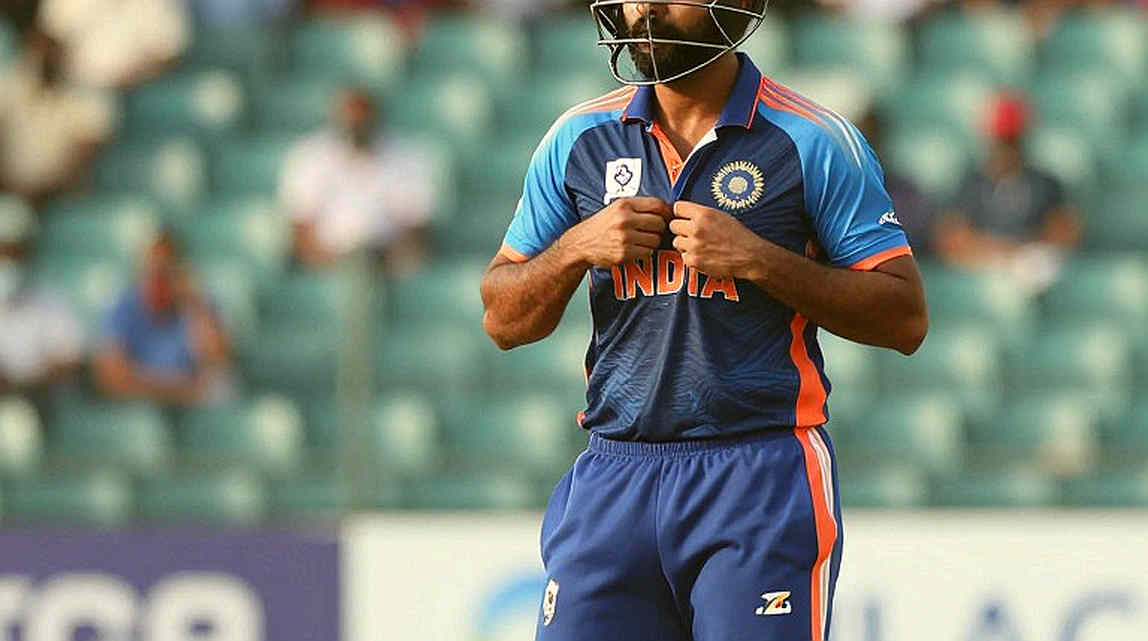
The match was played on J&K's soil — they were the hosts. The source says nothing specific about the pitch, but one delivery description tells a lot. The ball that dismissed Paras Dogra "moved away just enough to beat his defence and disturb the middle-stump". A ball seaming like that on Day 4 means the surface offered seam movement. That is the key to this match.
Core: the session that bought the match
Mukesh Kumar's 6/33 in the second innings is the single most decisive individual performance of the match. A six-wicket haul is rare in any first-class innings. He did not merely take wickets; he broke the innings' spine. J&K's openers, Shubham Khajuria and Qamran Iqbal, had built a 54-run stand; Akash Deep trapped Iqbal LBW to crack that foundation. Then in the 15th over, Mukesh removed Shubham Pundir and captain Paras Dogra off successive deliveries. Breaking an opening stand and removing the captain in one over — there are few worse bulletins in a fourth innings.
Akash Deep's numbers must be read separately. 3/25 in the innings, six wickets across 23.3 overs in the match. But the way the source frames him is not a statistical story — it is a fitness story. It says he has "recovered well enough", and ties his workload to the New Zealand tour selection conversation. In this match, Akash's real headline is not a number; it is a medical report. For a bowler returning from injury, proving he can sustain a four-day load is the actual test — 23.3 overs means roughly 141 balls, not a light burden for a returning quick.
Somewhere the source writes "Akash (25)", almost certainly a typo for "3/25", since the brief score reads "Akash Deep 3/25". A small thing, but it is exactly from such gaps in a domestic data chain that bad analysis is born — which is why I always record that scores need independent verification.
Between them, the two took nine of J&K's ten second-innings wickets. Nine of ten — that number tells you where the match landed. J&K's own bowlers were not poor: Nazir, Sunil Kumar and Lotra each took three wickets to keep Rest of India in check. Rest of India's batting was restrained rather than dominant — 237 in the first innings, 319 in the second. In the second they resumed overnight at 306/8 and added just 13 runs for the last three wickets.
A question surfaces here: if a side does not declare from 306/8, what does that mean? Probably the captain trusted his bowlers to force a result rather than set an early target. That is an inference, not a confirmed fact — so I keep it as a probability.
The match's real turn came after lunch on Day 4. At lunch, J&K were 89/3, needing only to pass time. After lunch they lost six wickets in nine overs for 22 runs. From 89/3 to 111 all out — that 22-run slide says more than the match's 167 runs ever will. Abdul Samad came in at six with the side at 89/3; the middle-order depth question starts right there.
Contrarian view: correlation and cause are different things
The easy explanation is: the better side won, the bench pacers proved how deep India's pace reserves are. That explanation is not false, but it is incomplete. Because a four-day match was decided by a single session, and in that session the bowlers had a Day-4 seaming surface beside them.
Correlation and cause are different things. Akash Deep bowled well in this match, true. But taking six wickets in 23.3 overs and being "ready for the New Zealand tour" sit far apart. The source itself says he has "recovered", but that is asserted, not proven. Taking a returning quick on an away tour always carries the risk of the old injury returning. The biggest risk here is not statistical; it is physical.
Another trap — the small sample. One innings of 6/33 cannot establish a new level for a bowler, especially when the pitch is helping him. How the same spell looks on a flat deck is absent from this data. Venue effect matters too: J&K were hosts, but home advantage could not stop their final-innings collapse.
The rule question also matters. The draw-decided-by-first-innings-lead rule reshapes team incentives. J&K's objective was survival, not scoring. So reading their collapse as a lack of batting ability would be wrong; it is a failure of game management. I opened the ledger in 2026 and the numbers began to travel — and that ledger taught me that when the rule changes, team behaviour changes with it.
The empty stadium taught me that silence has a shape. Attendance is not in the source, but the quiet around a domestic first-class match — few spectators, little broadcast, little commerce — is also data. The Irani Cup carries low commercial weight but high selection-signal weight. It is a cheap audition with high career leverage. A transfer is never merely a transaction; it is a migration of value — and here too, a performance's value moves straight from one match toward a national call-up.
Consider Morocco as a counterweight. Just as Morocco stepped out of Europe's shadow in football and built its own structure, India's domestic system is playing a long game of drawing talent out of smaller towns. — Root: Morocco. Sri Lanka's domestic first-class circuit carries the same tension — balance between audition and development.
The media frame and the ground reality
The word "outclass" implies sustained dominance. But the reality is that the winning side trailed by 41 on first innings, and the result came in a single session. This is not media conspiracy — it is the natural compression of a headline. Yet that compression later becomes history, and history becomes the basis of selection. That is my objection. This four-day domestic format has almost no connection to fantasy or betting markets, so the story survives only on selection urgency. The story is sharp, but its life is short — within a month it will dissolve into the New Zealand tour squad announcement.
The talent supply chain
Ranji Trophy to Irani Cup to the national side — this chain is Indian cricket's real asset. A side like J&K winning Ranji and hosting the Irani Cup is itself a signal: the domestic talent base is widening. And the men who bowled for Rest of India are players outside the first XI — yet they flattened the champions in a single session. In commercial-league terms this is nothing; in selection-pipeline terms it is a great deal.
What the data cannot see
The toss result is not in the source, no DRS incident is mentioned, and there is no weather information. These gaps leave an incompleteness in my analysis. Had I known the toss, reading the pitch's wear would be easier; had I known the weather, I could judge whether the seam movement was normal or abnormal. What is absent cannot be filled with inference — only acknowledged. Every match piece I write carries this section, because claiming without naming the referee, the weather and the tactical context is telling half a truth.
What lies ahead
I do not predict; I assemble the conditions for a prediction. Right now the conditions are these — Mukesh Kumar's 6/33 is a genuinely match-deciding return, and it is directly relevant to the New Zealand tour squad conversation. For Akash Deep, the question is not only wickets but overs — can he carry a sustained load on an away tour?
If the New Zealand squad is announced next, this match will remain either a piece of evidence or a warning. And if Akash is injured there, the accountability question for the management that cleared him will linger. The archive is patient, but the pattern is not.
Confidence ledger Sample size: one match, one dominant innings. Source: a single The Tribune report with no named correspondent; scores require independent verification. Three strongest counterarguments: first, pitch assistance may have inflated the bowlers' figures; second, selection decisions on one match are risky; third, the claim that "Akash has recovered" has not been independently verified.